
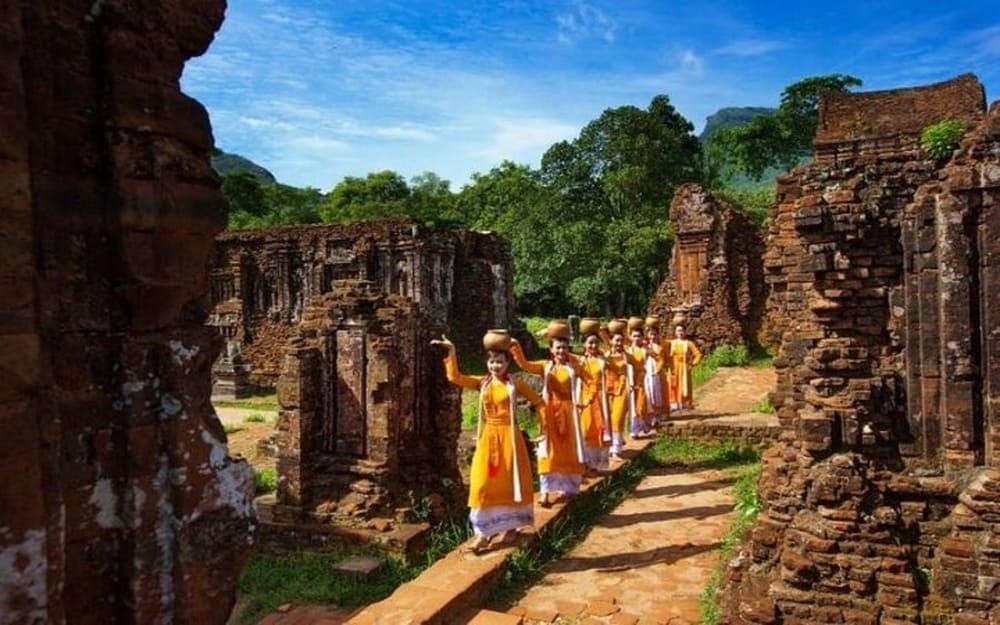

What is the historical significance of the My Son Sanctuary?
My Son Sanctuary, positioned in a valley of Vietnam's Quang Nam Province, is a UNESCO World Heritage Site featuring ruined Hindu temples built by the Cham people between the 4th and 14th centuries CE. Operating as the Champa Kingdom's religious and political center, the complex was primarily dedicated to the god Shiva.
.jpg)
The political center of the Champa Kingdom
The Champa Kingdom dominated central and southern Vietnam for over a millennium, controlling vital maritime trade routes connecting China to India. Successive Cham kings utilized the isolated My Son valley to legitimize their rule, constructing elaborate fired-brick temples immediately following their coronations. While the administrative capital frequently shifted between coastal cities like Indrapura and Simhapura, My Son remained the undisputed spiritual capital.
King Bhadravarman I initiated the first construction phase in the late 4th century, building a wooden temple that was later destroyed by fire. In the 7th century, King Sambhuvarman rebuilt the primary sanctuary using the enduring red brick and sandstone elements visible today. Over ten centuries, the ruling dynasties erected 71 distinct architectural structures across the two-kilometer-wide valley floor.
(1).jpg)
Preserving a UNESCO World Heritage Site
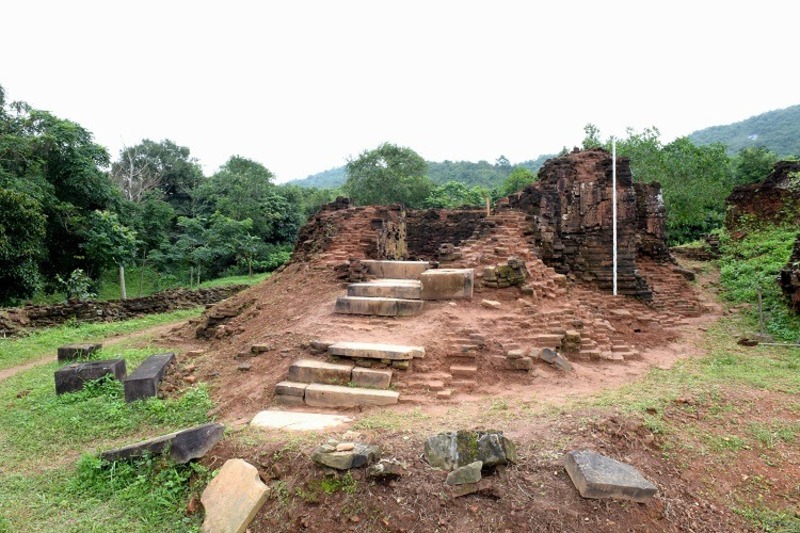
UNESCO granted My Son Sanctuary World Heritage status in 1999, recognizing its cultural value as a profound example of cultural interchange in Southeast Asia. However, the site suffered catastrophic damage during the Vietnam War when the Viet Cong utilized the valley as a base. In August 1969, United States B-52 bombers executed a concentrated carpet-bombing campaign, reducing the 71 documented structures down to just 20 surviving monuments.
French archaeologist Camille Paris first documented the overgrown ruins in 1889, prompting Henri Parmentier to lead early cataloging efforts in 1904. Modern stabilization owes its success to Polish architect Kazimierz Kwiatkowski, who relocated to the site in 1980. His team cleared undetonated landmines and implemented structural reinforcements that prevented the leaning group B kalan (sanctuary) from collapsing.
(2).jpg)
Dedication to the Hindu god Shiva
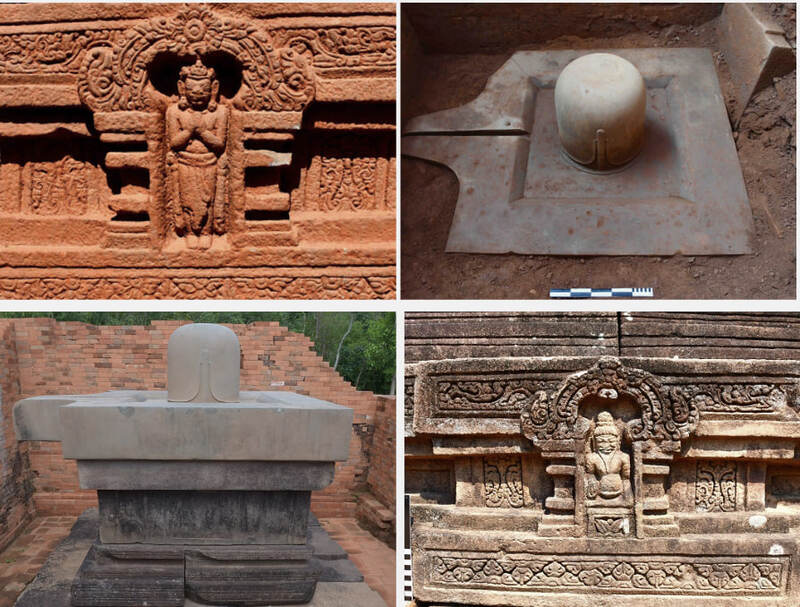
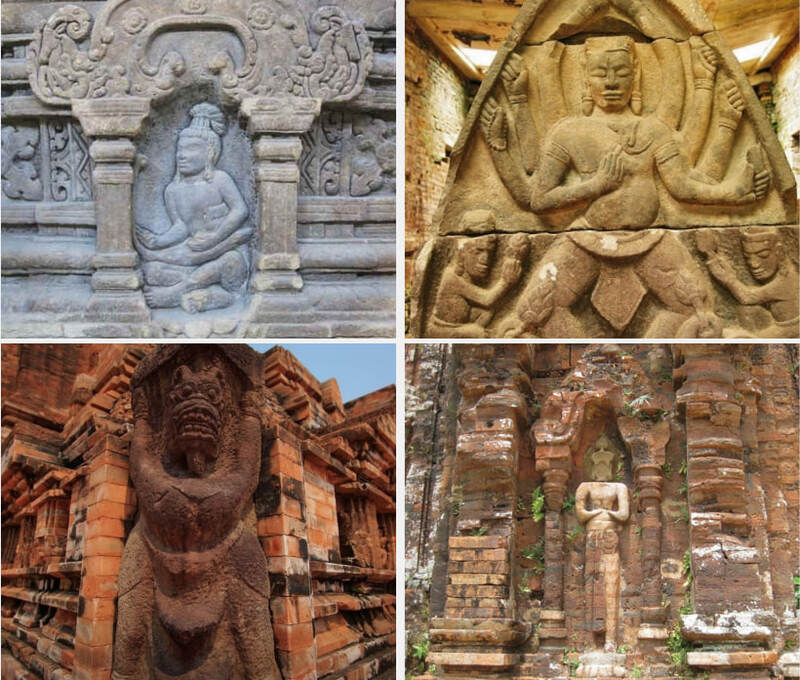
The Cham people practiced a localized form of Hinduism, heavily favoring the Shaiva sect. Nearly every primary temple within the My Son complex honors Shiva, specifically under the localized manifestation of Bhadresvara. The architecture functions as an earthly representation of Mount Meru, the mythical residence of the Hindu pantheon.
You will see distinct sandstone lingam and yoni structures stationed at the center of the main sanctuaries. These heavy stone pedestals represent male and female creative energy. To properly honor Shiva, Champa architects oriented the main temple doorways toward the east to welcome the rising sun, symbolizing the perpetual cycle of life and rebirth.
How much time is typically recommended for visiting My Son Sanctuary?
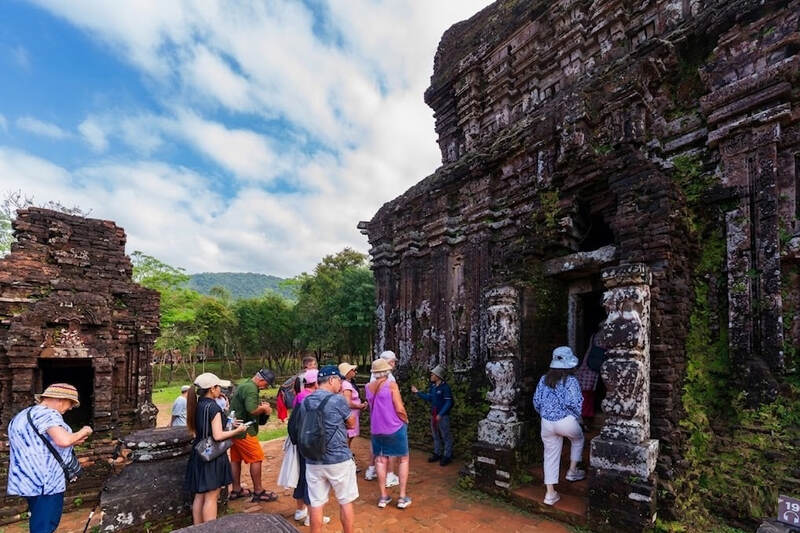
Visitors generally spend two to four hours exploring My Son Sanctuary. This timeframe allows guests to ride the shuttle, walk through the primary brick temple groups, watch a Cham folk art performance, and view artifacts inside the on-site My Son Museum without rushing through the intense midday jungle heat.
Plan your schedule around the electric buggy transport queues. If you arrive at 9:30 AM when the large Da Nang tour groups pull in, you must allocate an extra 20 minutes just to board the transport connecting the ticket gate to the jungle trailhead.
Actionable site itineraries
📌 Insider note:
Download the Di Tích Mỹ Sơn audio guide app via the App Store or Google Play for 70,000 VND ($2.76) before you lose cell service at the entrance. Bring your own wired or Bluetooth headphones to bypass the heavy, uncomfortable 50,000 VND ($1.97) physical devices rented at the ticket counter.
The 2-hour highlight reel
- Board the electric shuttle immediately after scanning your ticket to bypass the unshaded two-kilometer access road.
- Walk directly to groups B, C, and D, as they contain the most intact brickwork and the iconic centralized Shiva statues.
- Photograph the intricate sandstone carvings on the main kalan in group B before the major guided tours block the narrow doorways.
- Cross the small stream bridge toward group G to view the elevated terra-cotta foundations and the distinct Kala face motifs restored by Italian teams.
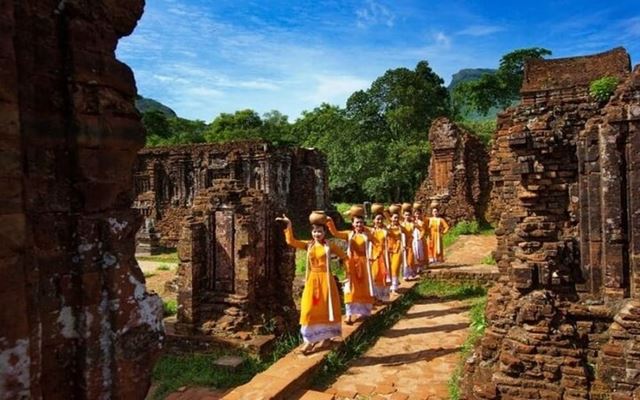
- Exit through the open-air performance pavilion at 10:45 AM to catch the second half of the daily Apsara dance before riding the shuttle back to the exit.
.jpg)
The 4-hour history buff route
- Download the Di Tích Mỹ Sơn app and play track 12 first, reading the history in reverse order to follow the chronological clockwise walking route.
- Enter the complex through the newly cleared April 2024 pathway at temple group K, observing the early foundation bricks completely isolated from the primary clusters.
- Proceed directly to group E and F to examine the heavy B-52 bomb damage and photograph the surviving early Cham stone pillars standing in the craters.
- Spend a full hour analyzing the detailed epigraphy (stone inscriptions) etched into the centralized B, C, and D complexes.
- Hike up the short, steep dirt trail to group A to view the massive 1969 blast crater where the A1 masterpiece stood.
- End your circuit inside the on-site My Son Museum located near the exit gate to view the recovered stone tympanums and original 1904 French maps in air conditioning.
What are the common transportation options to reach My Son Sanctuary?
My Son Sanctuary is accessible 40 to 45 kilometers southwest of Hoi An and Da Nang. Visitors typically book group tours, hire private cars, rent motorbikes, or use Grab. Alternative routes run alongside the Thu Bon River, while a two-kilometer electric shuttle bridges the main entrance to the ruins.
Getting to Quang Nam Province
The journey from Da Nang city center takes approximately 90 minutes via the QL1A national highway. If you start from the Hoi An Ancient Town, the drive drops to 60 minutes. The sanctuary sits deep within Duy Phu commune, requiring drivers to navigate off the multi-lane highways onto narrow provincial roads heavily populated by farm equipment and stray livestock.
.jpg)
The transportation trade-off
| Mode of Transport | Estimated Cost USD | Travel Time | Best for | Watch out for |
|---|---|---|---|---|
| Motorbike | $5.91 - $7.87 | 60 - 90 mins | Flexibility | Chaotic truck traffic on QL1A |
| Private Car | $35.00 - $45.00 | 50 - 75 mins | Comfort and AC | Miscommunications over wait times |
| Grab | $15.00 - $25.00 | 50 - 75 mins | One-way trips | Zero available return rides |
| Group Tour | $12.00 - $20.00 | 120 mins | Budget travelers | Rigid schedules and shop stops |
Finding private drivers and motorbike rentals in Hoi An
- Rent a semi-automatic Honda Blade from your Hoi An hotel or a dedicated shop on Hai Ba Trung street for approximately 150,000 VND ($5.91) per day.
- Photograph every existing scratch on the vehicle before handing over your passport or physical cash as a security deposit.
- Inspect the tire tread and test both the front and rear brakes thoroughly, as rural roads require sudden stops for crossing water buffalo.
- Map your route via provincial road DT610, avoiding the heavy container truck traffic that dominates the main QL1A highway.
- Negotiate a firm price upfront if hiring a private driver, explicitly confirming that the quoted round-trip rate covers tolls, parking fees, and a four-hour waiting period at the site.
- Download an offline Google Map of Quang Nam Province, as 4G cell service frequently drops along the final approach to the Duy Phu commune.
.jpg)
Booking a private car from Da Nang
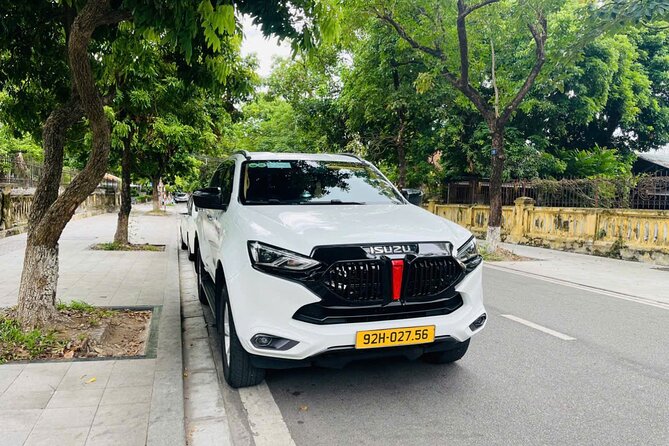
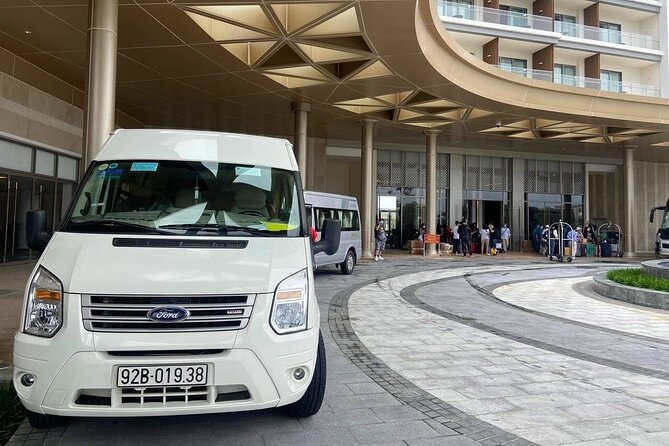
Booking a private round-trip vehicle from Da Nang offers the most reliable climate-controlled transport. Expect to pay between 850,000 VND ($33.46) and 1,150,000 VND ($45.28) for a standard four-seater sedan. You can arrange these drivers through international apps like Klook, local travel agents in the An Thuong expat area, or directly via your hotel concierge.
Most Da Nang drivers dictate a strict four-hour waiting window at the site parking lot. If you plan to hike all the exterior loops and watch the cultural performance, verify that the driver will extend the wait time for an additional 100,000 VND ($3.94) per hour.
.jpg)
Scenic routes along the Thu Bon River
If you depart from Hoi An, skip the highway and drive the route hugging the Thu Bon River. You cross the Cau Mong bridge and pass through extensive rice paddies and small fishing docks. This path forces you to drive slower due to uneven pavement, but you avoid the massive tour buses racing down QL1A.
.jpg)
📌 Insider note:
If you self-drive from Hoi An via road DT610B, take a brief 15-minute detour onto the Gò Nổi islet. This agricultural land strip crossing the Thu Bon River supplies the local region with fresh produce and offers uncrowded views of rural river life without a single tour bus in sight.
What is the entrance fee for My Son Sanctuary?
The My Son Sanctuary entrance fee is 150,000 Vietnamese Dong ($5.91) for foreign visitors and 100,000 Vietnamese Dong ($3.94) for Vietnamese nationals. This mandatory ticket includes the two-kilometer electric shuttle ride from the main gate to the jungle complex and access to daily Cham cultural performances.
Ticket costs in Vietnamese Dong
You purchase your tickets at the main gate building upon arrival. Bring physical cash in small denominations. The point-of-sale machines for credit cards frequently lose internet connection, leaving visitors stranded at the counter. The site operates from 6:30 AM to 5:30 PM daily.
If you ride a motorbike, factor in the official parking lot fee of 5,000 VND ($0.20). Your entry ticket grants you free admission to the Champa cultural performances held at the outdoor pavilion at 9:15 AM, 10:45 AM, 2:00 PM, and 3:30 PM. Arrive 10 minutes early to secure a seat near the front where you can clearly see the traditional saranai flute players.
.jpg)
What architectural styles are represented at My Son Sanctuary?
My Son Sanctuary displays distinct Champa Kingdom architectural periods, from early styles to later Hoa Lai and Dong Duong influences. The complex features unique red brick construction, intricate sandstone carvings, heavy Javanese influences in group A1, and extensive Hindu iconography honoring deities throughout the sacred Mhadravata mountain valley.
| Criteria | Temple Group A | Group B, C, D | Group G |
|---|---|---|---|
| Architectural Style | My Son E1 and Dong Duong | My Son A1 and Binh Dinh | Binh Dinh transitional |
| Key Influence | Heavy Javanese integration | Classic Cham classical period | Terracotta Kala demon faces |
| Preservation Status | Mostly destroyed in 1969 | Highly intact central structures | Stabilized by Italian teams |
| Best Photo Spot | The surviving stone foundations | The main Shiva statue in B1 | The elevated corner pillars |
Influence of Hinduism on temple design
Every structural choice at My Son traces back to Hindu cosmology. The central tower, known as the kalan, represents the physical center of the universe. Surrounding the kalan, builders constructed mandapas (meditation halls) and kosagrhas (fire houses with distinctive saddle-shaped roofs). You will spot carved sandstone lintels depicting Vishnu, Brahma, and Indra riding Airavata the three-headed elephant.
The Cham architects utilized a highly specialized construction method. They stacked soft, unfired bricks together, using the natural resin of the native dipterocarp tree as an invisible mortar. Once they assembled the entire temple shape, they built a massive wood fire around the exterior to bake the complete structure simultaneously, resulting in monolithic, watertight walls.
The lingam and yoni symbolism of Răng Mèo mountain
The geography of the valley physically reinforces the religious symbolism. Looming directly over the complex is Răng Mèo (Cat's Tooth) mountain, also known as Mhadravata. The mountain's jagged peak naturally mimics the shape of a lingam. By building the sanctuary directly beneath this peak, the Cham kings spiritually linked the entire valley to Shiva's protective power.
📌 Insider note:
Look closely at the brickwork in group B to spot the physical legacy of the 1960s conflict. You will find clustered Vietnam War bullet holes embedded directly next to the precise restoration patches engineered by Polish architect Kazimierz Kwiatkowski, who lived on-site in the 1980s to clear landmines and stabilize the leaning towers.
.jpg)
Frequently asked questions
How does My Son Sanctuary compare to Angkor Wat in terms of scale and preservation?
My Son Sanctuary spans 142 hectares with 71 ruined structures, significantly smaller than the 162-hectare Angkor Wat complex. While Angkor utilizes massive sandstone blocks, the Champa builders at My Son relied on unique fired red bricks. My Son endured heavy 1969 aerial bombing, drastically reducing its preservation level.
What unexpected insights can one gain from visiting My Son Museum?
The air-conditioned My Son Museum, located 200 meters past the main ticket gate, displays original sandstone tympanums and detailed French architectural maps from 1904. You will find recovered lingams and learn the proprietary dipterocarp resin technique the Cham people used to bind red bricks without visible mortar.
Are there specific cultural customs to observe when viewing Cham people artifacts?
You must refrain from touching the porous red brick walls or climbing onto the raised sandstone Yoni pedestals inside the temples. Since groups B and C remain active spiritual sites for modern Cham descendants, maintain a lowered voice and avoid walking directly over surviving threshold stones.
What is the appropriate dress code for visiting the ancient ruins of My Son Sanctuary?
Because My Son operates as a sacred Hindu site, you need to wear clothing covering your shoulders and knees. Choose lightweight linen fabrics to handle the valley's severe humidity, and wear closed-toe hiking shoes to navigate the unpaved dirt trails separating the B and G groups.
What is the best time of day to visit My Son Sanctuary to avoid crowds?
Arrive exactly at 6:30 AM when the main gates open to experience the complex before the large Da Nang tour buses park at 9:30 AM. Alternatively, visit after 2:30 PM when morning groups depart, though afternoon temperatures frequently exceed 35 degrees Celsius (95 degrees Fahrenheit) between May and August.
ảnh CTA TA



Comments