

When is the Hoi An lantern festival 2026?
Held on the 14th day of every lunar month, the festival celebrates the full moon. The event runs from 6:00 PM to 10:00 PM, with upcoming major dates falling on January 2, February 1, and March 2. Cross-reference your itinerary with the lunisolar calendar, as Western dates shift annually.
%20(1).jpg)
The official schedule and lunar calendar planning
Organizing a trip to Vietnam requires aligning your travel dates with the traditional lunisolar calendar. The festival always falls on the 14th day of the lunar month, which occurs exactly one day before the astronomical full moon. Because the lunar cycle varies from the standard Gregorian calendar, you must project these dates carefully when booking long-haul flights or non-refundable hotels.
During a standard year, you will have 12 opportunities to attend the official festival. However, lunar leap years contain 13 months, providing an extra date for visitors. Below is a comprehensive projection for the upcoming calendar year to assist your itinerary planning.
| Lunar Month (14th Day) | Gregorian Date | Seasonal Note |
|---|---|---|
| Month 1 | January 2 | Winter season, cooler evening temperatures |
| Month 2 | February 1 | Peak Lunar New Year preparation |
| Month 3 | March 2 | First moon after Tet (Highest attendance) |
| Month 4 | March 31 | Dry season begins |
| Month 5 | April 30 | Coincides with Reunification Day holiday |
| Month 6 | May 29 | Hot, humid weather expected |
| Month 7 | June 28 | Summer domestic travel peak |
| Month 8 | July 27 | Mid-summer festivals |
| Month 9 | August 26 | Ghost Month traditions integrated |
| Month 10 | September 25 | Mid-Autumn Festival overlap |
| Month 11 | October 24 | Rainy season risk, potential flooding |
| Month 12 | November 23 | Heavy rain expected, events may shift indoors |
The daily timing remains strict regardless of the month you choose to visit. You should plan your evening around two distinct phases of the event.
- Festival window: 18:00 to 22:00. This is when traffic barriers go up and vendors begin selling goods.
- Peak time: The 20:00 'lights out' moment. All electric power is disconnected at this exact minute.
(1).jpg)
What happens during the Hoi An lantern festival?
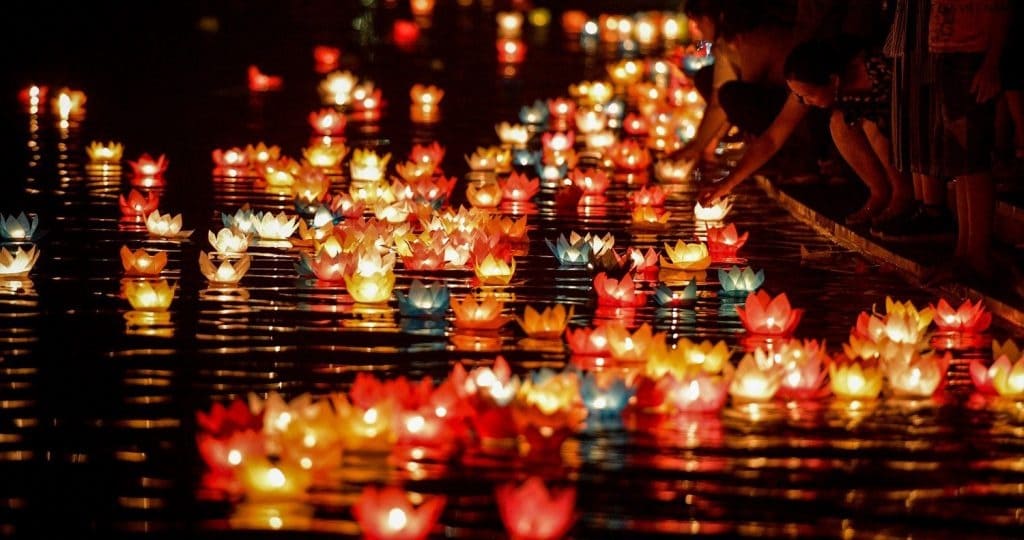
At 8:00 PM, modern street lights and businesses switch off their electricity. The town relies entirely on handmade paper lanterns while locals honor ancestors, release floating lanterns on the Hoai River, and enjoy traditional folk performances. This strict power down transforms the historic district into an authentic, candlelit pedestrian zone.
The lights out policy and cultural rituals
When the clock strikes 20:00, restaurants, cafes, and municipal streetlamps across Tran Phu, Nguyen Thai Hoc, and Bach Dang streets cut their power. For the next two hours, illumination comes strictly from silk lanterns hung across the streets and floating wax candles on the water. This environment mimics the town's original appearance before modern electricity arrived.
(1).jpg)
📌 Expert Insight:
The first full moon after the Lunar New Year (Tet) features significantly more elaborate cultural ceremonies, making it the most intensely celebrated festival of the year.
The visual spectacle serves a deeper religious and cultural purpose. The rituals maintain deep roots in Buddhist traditions and ancestor worship. You will observe local shop owners setting up small folding tables outside their storefronts. They place offerings of fresh fruit, burning sandalwood incense, and imitation paper money to ensure prosperity and honor deceased relatives.
These practices are heavily shaped by the town's history as a prominent international trading port. You can see the direct influence of 16th-century Japanese and Chinese merchants in the architecture of the assembly halls and the specific shapes of the lanterns used today.
.jpg)
Bai choi singing and UNESCO heritage
Beyond the visual elements, auditory experiences play a massive role in the celebration. You will encounter Bai Choi, a live Central Vietnamese performing art form combining music, improvised poetry, and interactive acting. Recognized as a UNESCO Intangible Cultural Heritage, this folk game operates similarly to bingo, where players purchase wooden cards and a central singer draws sticks while singing rhyming riddles to announce the winning characters.
- The game relies on live Central Vietnamese performing arts combining music, poetry, and acting.
- You will also experience localized lion and dragon dances echoing through the ancient streets, accompanied by loud wooden drums meant to dispel negative energy.
.jpg)
Is the Hoi An lantern festival only on full moon?
Yes, the official festival with the strict lights-out policy occurs only monthly on the 14th lunar day. However, standard lantern activities and boat rides are available in the town every single night. You can rent sampans and experience the illuminated waterways regardless of when your trip is scheduled.
Hoi An festival vs normal night
Many travelers worry they will miss out entirely if their itinerary does not align with the 14th lunar day. Fortunately, the local tourism board ensures that the primary visual draw, the glowing lanterns, remains a permanent fixture. Every single night, vendors along the Hoai River sell floating candles, and sampan operators are ready to take you out on the water.
The difference lies primarily in the atmosphere, the scale of the crowds, and the electrical lighting. To help you decide if adjusting your travel schedule is necessary, compare the specific metrics below.
.jpg)
| Criteria | Festival Night (14th Lunar Day) | Standard Night |
|---|---|---|
| Street Lighting | Electricity OFF (Candlelight only) | Electricity ON (Neon signs and lamps) |
| Crowd Levels | Extreme (Gridlock in central areas) | Moderate (Comfortable walking) |
| Cultural Events | Bai Choi / Full Lion Dances | Standard street music / Acoustic guitars |
What to do at the Hoi An lantern festival?
Visitors can release paper lanterns for 50 cents, take traditional sampan boat rides, sample vegetarian street food and moon cakes, watch dragon dances, and explore the sprawling night market along the river. These core activities provide a thorough introduction to the region's historical trading post culture.
The fair price guide: Don't overpay for your sampan ride
Taking a wooden sampan out onto the river is the most popular activity, but it requires navigating a highly unregulated pricing environment. Hundreds of boat operators compete for passengers, and initial price quotes are often aggressively inflated for foreigners. To ensure you pay a fair rate, follow these specific protocols.
- Look for official yellow price boards near the municipal ticket booths along the river walkway.
- Do not engage with aggressive street touts who intercept you blocks away from the actual water.
%20(1).jpg)
📌 Expert Insight:
A fair price for a 20-minute private boat ride for 1 to 4 people is roughly VND 150,000 to 200,000 ($6 to $8 USD).
Responsible magic: The environmental side of the lantern festival
The massive influx of visitors has created severe ecological concerns related to overtourism. Releasing thousands of wax candles housed in cheap paper into the Hoai River leaves a massive footprint. While the visual impact is stunning from the shoreline, the resulting debris clogs the waterways by midnight.
To combat this, local municipal teams conduct extensive morning cleanup efforts, manually extracting sunken wax and metal wire from the water. You hold the power to lessen this burden through smart consumer choices during your visit.
- Support green initiatives by purchasing 100% biodegradable paper lanterns without plastic or metal frames.
- Alternatively, opt to just take photos of others' lanterns for a completely zero-waste trip.
(1).jpg)
Street food stalls and night market shopping
Because the festival is rooted in Buddhism, observing strict vegetarianism on the 14th lunar day is common among locals. Consequently, many street vendors alter their typical menus. You will find excellent vegetarian versions of central Vietnamese staples, including plant-based dumplings and noodle soups served from metal carts along the pavement.
Desserts are heavily featured during this specific lunar phase. You can easily spend an hour tasting moon cakes filled with sweet red bean paste or lotus seeds. Afterward, cross the illuminated bridge to explore the sprawling night market located on Nguyen Hoang Street, where merchants sell handmade silk, pottery, and souvenirs.
.jpg)
📌 Expert Insight:
Cash is king! Small vendors selling lanterns and street food almost exclusively take VND cash.
How crowded is the Hoi An lantern festival?
It is exceptionally crowded with both locals and tourists. The Old Town perimeter enforces a strict pedestrian lockdown with no motorized vehicles allowed, so you must be prepared to walk several kilometers in dense crowds. Planning your approach route beforehand helps mitigate delays and navigation issues.
Navigation, logistics, and avoiding crowds
The sheer density of people attending the official full moon event can cause temporary gridlock in narrow alleys. The heaviest foot traffic concentrates around the central waterways. If you want to secure a prime viewing location for the 20:00 lights-out moment, you must arrive early to secure a spot near the An Hoi Bridge or the historical Japanese Covered Bridge (Cau Pagoda).
.jpg)
Because motorbikes and cars are strictly banned from crossing into the heritage zone after 15:00, ride-hailing apps will drop you off at the perimeter. You will need to park at designated lots on roads like Hai Ba Trung and proceed on foot.
- Wear comfortable, sturdy walking shoes to handle the uneven cobblestones and long distances.
- Sampan safety is crucial: Small wooden boats can be shaky when loaded from crowded docks, so ensure basic water safety comfort before boarding.
.jpg)
Photography tips for the golden hour
Shooting clear, professional-grade photos during a blackout event requires specific technical adjustments. Relying on your smartphone's default auto-mode will likely result in blurry, grainy images due to the lack of ambient street lighting. Furthermore, the constant movement of the crowd makes setting up a shot difficult.
- The 'Golden Hour' for optimal festival photos occurs between 7:00 PM and 9:00 PM when the lantern colors contrast sharpest against the dark sky.
- Avoid using your camera's flash to prevent harsh glare from ruining the river reflections.
- Use a lightweight tripod or monopod and manually activate your night-mode settings to capture the natural, warm glow of the candlelight.
ảnhCTA
Comments