

What is the history of Vietnamese tea culture?
Vietnamese tea culture spans over 1,000 years, originating during the Ly Dynasty. Modernized by French plantations in the 1880s, Vietnam is now the world’s seventh largest tea producer, heavily relying on smallholder farms. The drink remains deeply rooted in daily hospitality, classical poetry, and traditional yin-yang philosophy.
.jpg)
Yin yang in Vietnamese tea philosophy
Vietnamese tea preparation actively balances the five elements to achieve harmony. The water element is boiled over a fire source, poured into an earth element (the unglazed clay pot), which holds the wood element (the dried tea leaves). You will frequently see metal utensils used to manage the coals or the tea leaves, completing the cycle.
.jpg)
Historically, tea served as a focal point for scholars and poets during the Tran Dynasty. Intellectuals wrote extensive prose praising the mental clarity provided by a properly brewed cup. It was considered a conduit for philosophical debate and meditation, particularly among Buddhist monks in northern highland monasteries.
The symbolism of plain tea centers on purity and an unfiltered connection to nature. Unlike highly processed beverages, standard green tea represents life in its most natural state. Locals believe that consuming tea with minimal intervention aligns the human body with the natural environment.
.jpg)
How does Vietnamese tea culture differ from Chinese or Japanese?
Unlike the rigid rules of the Japanese tea ceremony or complex Chinese rituals, Vietnamese tea culture thrives on informality, plain tea purity, and communal sharing. It prioritizes a natural bitter-to-sweet flavor profile rather than heavy floral mixing or strict, highly formalized hosting etiquette.
When you participate in a Japanese tea ceremony, every hand movement, bowl rotation, and whisking angle is heavily choreographed. In contrast, pouring a cup in Hanoi focuses entirely on the conversation. The host aims to serve guests efficiently, maintaining eye contact rather than focusing on the physical mechanics of the pour.
.jpg)
Chinese tea culture frequently utilizes multiple steeping tools, scent cups, and a vast array of aged or fermented teas like pu-erh. The Vietnamese approach leans heavily toward unfermented green teas, brewed strong and fast. The goal is to extract the maximum robust flavor in a single, unpretentious setting.
| Criteria | Vietnamese tea culture | Chinese tea culture |
|---|---|---|
| Formality Level | Highly informal, conversational, and communal | Moderate to high formality (Gongfu Cha) |
| Core Varieties | Plain green, Lotus infused, Ancient Shan Tuyết | Oolong, Pu-erh, Black, White teas |
| Preparation Style | Strong, single short steep, minimal tools | Multiple rapid infusions, extensive specialized clay tools |
What are popular types of Vietnamese tea?
Popular varieties include everyday green tea, high-altitude ancient Shan Tuyết, and delicate floral blends like jasmine and chrysanthemum. Lotus tea is considered the absolute pinnacle, historically crafted for royalty by infusing high-grade green leaves inside fresh lotus blossoms overnight. These selections highlight the country's diverse agricultural zones.
.jpg)
Traditional green tea and ancient Shan tuyet
Plain green tea absolutely dominates Northern Vietnam, specifically leaves sourced from Thai Nguyen province. Locals drink this daily, characterized by a sharp, slightly astringent opening that mellows into a grassy finish. You will find this standard green tea served in nearly every home, roadside diner, and government office north of Da Nang.
Shan Tuyết (Snow Tea) offers a drastically different profile. Cultivated in the high-altitude provinces of Ha Giang and Yen Bai, these leaves are harvested from wild trees that are often hundreds of years old. The name derives from the thick, white, fuzzy hairs covering the buds, which produce a complex, mineral-heavy liquid with a distinctly wild, sweet aftertaste.
.jpg)
Floral scented teas: Lotus vs jasmine tea differences
Authentic lotus tea (Trà Sen) requires massive labor, primarily concentrated around West Lake in Hanoi. Producers harvest lotus blossoms before dawn, carefully pry open the petals, insert premium green tea leaves, and bind the flower shut. The tea rests overnight to absorb the fragrance, a process often repeated up to seven times to lock in the scent.
Jasmine tea (Trà Nhài) serves as the accessible, everyday floral alternative. You will encounter jasmine tea frequently in southern restaurants and modern cafes. It provides a highly fragrant, slightly sweet aroma that cuts through the heavy humidity of Ho Chi Minh City without carrying the premium price tag of authentic lotus blends.
.jpg)
📌 Expert Insight:
Good to know - High-quality Lotus tea is sometimes aged in the fridge for up to two months by connoisseurs to deepen the fragrance.
Herbal and medicinal varieties
Beyond traditional tea leaves, herbal infusions play a critical role in local wellness routines. Chrysanthemum tea is heavily favored for its body-cooling properties. Locals consume it to lower internal heat, aid digestion after heavy meals, and promote relaxation before sleeping.
Conversely, hot ginger tea acts as a powerful heating agent. Formulated with freshly crushed ginger root, honey, and occasionally lemongrass, it functions as a primary remedy for common colds, digestive issues, and cold-weather ailments during the northern winters.
.jpg)
📌 Expert Insight:
Good to know - Artichoke tea comes in two variants: the yellow, sweet kind made from flowers (favored by foreigners), and the black, bitter kind made from stems. Ginger tea is the ultimate local remedy for seasickness on Halong Bay boat tours.
How is tea traditionally prepared in Vietnam?
Loose leaves are brewed strong in small teapots using a rapid steeping technique. A crucial step is the rinse—briefly washing leaves with hot water to awaken the aroma and discard field dust. The tea is steeped quickly, producing a bitter initial taste followed by a sweet aftertaste.
The 4-step brewing process
First, the host warms the teapot by pouring boiling water inside and immediately draining it. You then add dry loose leaves, filling the pot roughly one-third full. This ratio ensures a highly concentrated, robust extraction that stands up to the local palate.
.jpg)
The second step involves the 'rinse'. The host pours enough hot water to submerge the leaves, then discards the liquid within three seconds. This action removes impurities, washes away fine leaf dust left from the drying phase, and opens the cellular structure of the leaf.
Third, the primary steep occurs. Fresh hot water is poured over the awakened leaves and left for a remarkably short period, usually 45 to 60 seconds. Allowing the tea to over-steep results in a harsh, overly tannic liquid that locals consider ruined.
.jpg)
Finally, communal sharing begins. The host pours the tea into tiny cups, often using a sweeping motion across all cups in a row to ensure the flavor concentration remains equal for every guest. Pouring sequentially would leave the first cup too weak and the final cup too bitter.
📌 Expert Insight:
Good to know - The 'Welcome Rule': In a Vietnamese home, tea is offered immediately. Declining is fine, but taking at least one sip is a fundamental gesture of respect. Be aware that Vietnamese green tea packs high caffeine!
The modern Trà Đá (street iced tea) hygiene and social survival guide
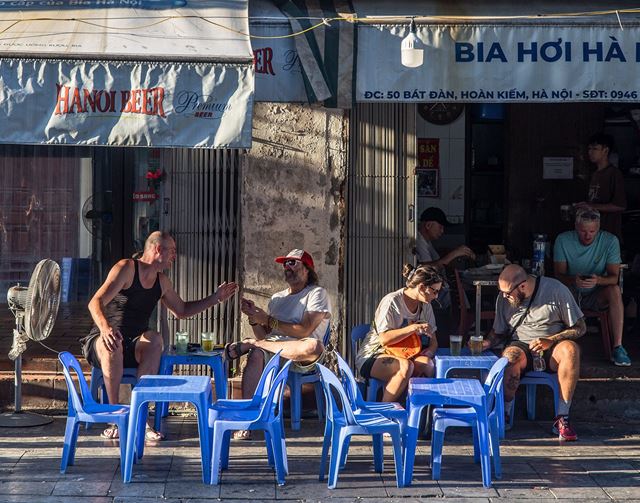
Identifying clean ice and understanding low-stakes social etiquette are key to navigating modern street tea. This cheap iced beverage acts as the primary social lubricant across urban centers, offering an informal space for locals to gather, smoke tobacco, and directly debate current daily news.
.jpg)
Identifying safe street tea and unspoken rules
When selecting a sidewalk vendor, conduct a rapid safety check regarding the ice. You must look for factory-made 'tube ice', which features a distinct hollow center and is manufactured using municipal filtered water. Avoid stalls using crushed 'block ice', as these large blocks are frequently dragged across unwashed sidewalks prior to chipping.
Participating in street tea culture requires understanding the 'Buy-In' etiquette. A standard glass costs between 3,000 and 5,000 VND ($0.12–$0.20 USD). This microscopic purchase acts as rent; it allows you to occupy a plastic stool for hours, providing an unobstructed view to people-watch without pressure to order more.
.jpg)
📌 Expert Insight:
Good to know - The 'Chaser' Concept: Trà đá is often served as a free palate cleanser after drinking heavy coffee or eating a rich bowl of Phở.
Where are the best places to experience Vietnamese tea culture?
The best experiences range from ancient Hanoi Old Quarter cafes and misty lotus fields to vast plantations in Phú Thọ and Thai Nguyen. Travelers seeking quick efficiency can discover highly active street stalls and modern specialty tea houses concentrated heavily throughout Ho Chi Minh City districts.
.jpg)
Northern mountain plantations and the tea harvest season
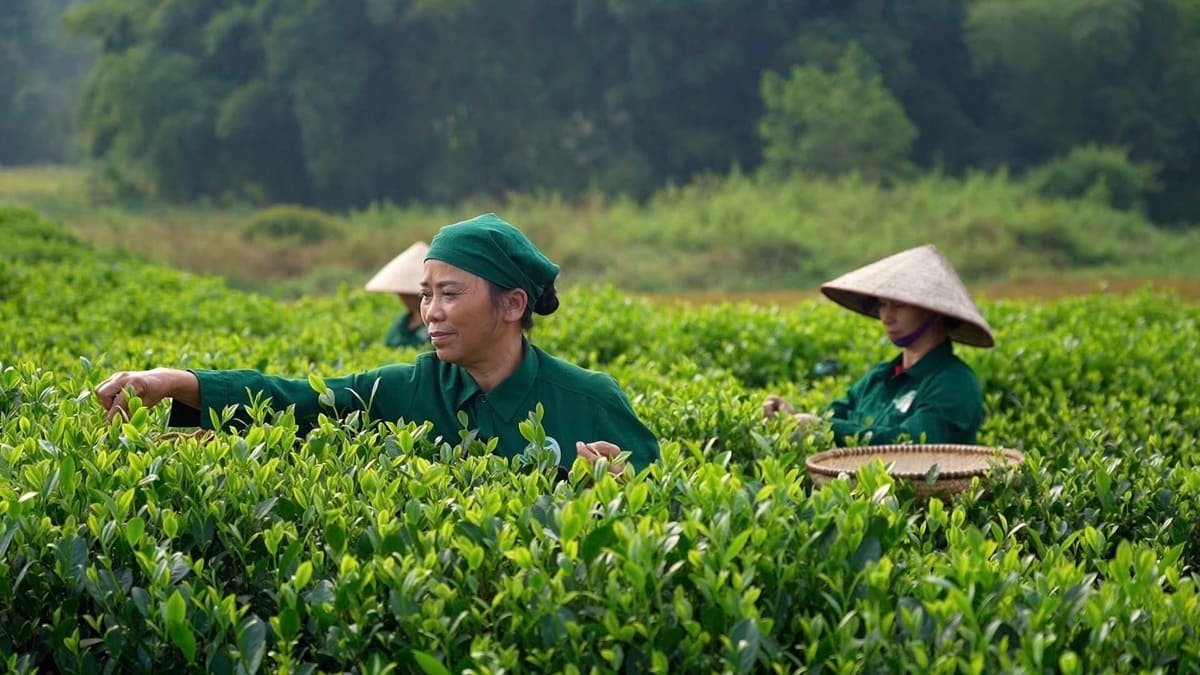
Thai Nguyen is universally recognized as the 'Tea Capital' of Vietnam. Located roughly two hours north of Hanoi, its rolling terraced hills provide the perfect microclimate for green tea. You should visit during the spring harvest (April to June) to witness farmers hand-picking the youngest buds at dawn.
Further northwest lies Phú Thọ, renowned for its historical French colonial plantation routes. The infrastructure here still reflects late 19th-century commercial farming layouts. Southward, the Central Highlands around Lam Dong and Da Lat offer excellent conditions for cultivating Oolong varieties, thriving in the cool, high-altitude mountain air.
.jpg)
Quick-access tea cafes in Ho Chi Minh City and Hanoi
If you lack time for rural excursions, major cities offer concentrated cultural experiences. In Hanoi, heritage tea houses located within the Old Quarter serve traditional lotus blends in century-old courtyards. In Ho Chi Minh City, District 1 features sleek, modern establishments that pair premium Shan Tuyết with high-speed Wi-Fi and air conditioning.
| Criteria | Northern mountain plantations | Urban cafes (Hanoi & HCMC) |
|---|---|---|
| Location | Thai Nguyen, Phu Tho, Lam Dong | Hanoi Old Quarter, HCMC District 1 |
| Best Time to Visit | Spring harvest season (April - June) | Early morning or late afternoon year-round |
| Cost | $15 - $30 USD (Guided farm tours) | $2 - $6 USD (Per premium teapot) |
| Vibe | Agricultural, educational, physically active | Cultural heritage (North) or Casual modern (South) |
.jpg)
The foreigner's buying guide: Souvenir vs specialty grade
Purchasing high-quality Vietnamese tea requires requesting aroma samples to avoid stale products and understanding baseline market pricing. True specialty grades are sold in vacuum-sealed bags at dedicated retail shops, bypassing the improperly stored, mass-market tins commonly found scattered across major tourist markets.
(1).jpg)
The aroma test and avoiding tourist traps
Before purchasing any loose leaf product, you must politely ask for a sample. Authentic, properly stored green tea should emit notes of fresh grass, seaweed, or natural flowers. If the leaves smell like dried hay, dust, or present a sharp chemical perfume, the vendor is selling heavily degraded or artificially flavored stock.
Tourist traps prominently display loose tea in open-air baskets or unsealed wooden barrels. Exposure to humidity and sunlight destroys the cellular structure within days. Always look for merchants utilizing vacuum-sealed silver bags, which block light and oxidation, effectively preserving the freshness for your flight home.
.jpg)
Price benchmarks and customs bio-security
Market pricing fluctuates significantly based on the region and processing method. Premium, authentic Lotus tea from West Lake frequently commands prices upwards of $300 to $500 per kilogram due to the intense manual labor. In contrast, daily-grade Thai Nguyen green tea remains highly accessible, usually costing between $10 and $20 per kilogram.
When returning home to the US, EU, or Australia, customs officials focus heavily on agricultural products. Dried, commercially packaged tea leaves are generally permitted without issue. However, you must explicitly declare the item on your customs card to avoid bio-security fines, ensuring the vacuum seals remain intact until you pass through border control.
.jpg)
| Criteria | Tourist market tea | Specialty shop tea |
|---|---|---|
| Tea Type | Generic green, artificially flavored lotus | Ancient Shan Tuyết, authentically scented lotus |
| Price per 100g in USD | $1.50 - $4.00 | $15.00 - $85.00+ |
| Quality Indicators | Stored in open bins, dusty appearance, chemical scent | Vacuum sealed bags, exact harvest date printed, natural aroma |
CTA







Comments