
What is considered respectful behavior in Vietnamese culture?
Respecting elders through titles and slight bows is foundational. Dress modestly, especially at sacred sites, by covering shoulders and knees. Use an open hand to point, avoid touching heads, and prioritize social harmony over direct confrontation to preserve 'face'. These unspoken rules govern nearly every interaction across the country. Understanding them ensures you build rapport quickly while avoiding unintentional offense during your travels.
.jpg)
Mastering greetings and the age-based honorific trick
Initial interactions establish the baseline for all future communication in Vietnam. Use 'Xin chào' (pronounced sin chow) for a general hello. Combine this phrase with a polite smile and a slight nod of the head, particularly when addressing someone older than you. Physical contact during greetings remains minimal; a light handshake is acceptable in business environments, but bowing the head is the standard sign of deference.
Always give and receive items with both hands. This protocol applies strictly to business cards, currency, documents, and gifts. Handing a shopkeeper money with one hand, especially if looking away, signals arrogance. Using both hands physically demonstrates that you value the transaction and respect the person opposite you.
.jpg)
Applying the correct honorifics will instantly upgrade your social standing with locals. Vietnamese pronouns change based on the perceived age and gender of the speaker relative to the listener. Use 'Anh' to address a man slightly older than you (older brother), and 'Chị' for a woman slightly older than you (older sister). If the person is clearly younger, refer to them as 'Em'. Mastering these three basic terms bridges cultural gaps faster than any other linguistic tool.
📌 Expert Insight:
Expect locals to ask personal questions about your age, marital status, or income during a first meeting. This is not nosey; it is a cultural tool used to determine your correct honorific and social standing.
The art of saving face and conflict resolution
The concept of 'face' (thể diện) dictates the limits of public behavior. Face represents a person's dignity, reputation, and social standing. Causing someone to lose face through public criticism or visible anger destroys relationships permanently. Consequently, you must prioritize harmony over being 'right'.
📌 Expert Insight:
A smile in Vietnam can sometimes signify embarrassment or 'I don't know' rather than happiness. Never raise your voice publicly, as displaying uncontrolled anger results in an immediate loss of face for everyone involved.
When you need to complain about a hotel room or a restaurant meal, deploy the 'Sandwich Method'. Start the conversation with a genuine compliment about the venue. Next, state the issue quietly and privately to the staff member. Finally, ask for their 'help' in resolving the situation rather than issuing a blunt demand. Framing your complaint as a request for assistance allows the staff to fix the problem while maintaining their dignity.
Public displays of affection (PDA) remain largely taboo, especially outside major urban centers. Holding hands is acceptable, but kissing or heavy physical contact in parks or cafes makes locals highly uncomfortable. Furthermore, keep conversational volumes low. Loudly dominating a public space is considered deeply unrefined.
(1).jpg)
How should you dress when visiting temples in Vietnam?
You must wear conservative clothing that fully covers your shoulders and knees. Remove hats, sunglasses, and footwear before entering main halls. Never point your feet at Buddha statues or altars, as feet are considered the lowest part of the body. Following these regulations demonstrates cultural competence. Monks and temple caretakers actively enforce these boundaries, regularly denying entry to visitors who fail to comply with basic modesty standards.
Sacred site physical boundaries and photography
Navigating pagodas requires physical awareness. When crossing through temple doorways, step over the raised wooden threshold rather than directly on it. Stepping on the threshold disrespects the deity guarding the entrance. Inside the main hall (Chánh điện), sit by tucking your legs underneath you or crossing them neatly. Pointing the soles of your feet toward any altar or person is a severe insult.
Photography rules vary, but strict etiquette applies universally. Do not take selfies or photograph people actively praying without securing explicit permission first. Never use flash photography inside dim temple interiors, as it disrupts the meditative environment and damages ancient lacquerware. If you wish to photograph the main altar, stand to the side rather than positioning yourself dead-center in the path of the deities.
Observe the syncretic beliefs of Tam Giáo, which blends Buddhism, Taoism, and Confucianism. You will often see elements of all three philosophies within a single complex. When walking through these spaces, move in a clockwise direction. This circular movement aligns with traditional Buddhist practices and ensures a smooth flow of foot traffic during busy festival days.
(1).jpg)
What are key Vietnamese customs and traditions?
Core customs revolve around Confucian harmony and family bonds, highlighted by ancestor veneration at home altars. Major traditions include the family-centric Tết Lunar New Year, the Mid-Autumn Festival with lanterns, traditional áo dài attire, and northern water puppetry. These practices dictate the rhythm of daily life. Observing these events provides crucial context for understanding the national identity and local value systems.
Ancestor veneration and daily life
Ancestor worship forms the spiritual backbone of the household. Nearly every home, business, and hotel maintains a small altar (Bàn thờ). Locals believe deceased relatives continue to live in another realm and require daily sustenance. You will see fresh fruit, cups of rice wine, and lit incense placed on these altars. Incense is always burned in odd numbers (typically one or three sticks), as odd numbers represent the yang energy of the living world connecting with the yin energy of the deceased.
During the first and fifteenth days of the lunar month, families burn votive paper offerings. These paper replicas of money, clothing, and even modern items like smartphones are sent to the afterlife via fire. When interacting with locals, avoid gifting chrysanthemums. These distinct yellow and white flowers are strictly associated with funerals and altar offerings, making them highly inappropriate for birthdays or casual housewarming gifts.
.jpg)
North vs South Vietnam: Cultural comparisons
Regional variations heavily influence daily interactions. The country stretches over 1,600 kilometers, resulting in distinct behavioral and environmental differences between the North and the South. Adjusting your expectations based on your location prevents culture shock.
| Criteria | North (Hanoi) | South (Ho Chi Minh City) |
|---|---|---|
| Vibe | Formal, traditional, highly protocol-driven. | Open, pragmatic, highly commercial-focused. |
| Cuisine | Subtle flavors, savory, perfectly balanced. | Sweeter flavor profiles, spicier, robust herbs. |
| Weather | Four distinct seasons, including cold winters. | Two distinct seasons (wet/dry), consistently hot. |
What foods represent Vietnamese culture and dining etiquette?
Iconic dishes include phở noodle soup, bánh mì, and meals emphasizing a balance of rice, fresh herbs, and fish sauce. Dining is family-style; sharing dishes is central to the culture, often paired with beer in social drinking sessions. Meals act as communal events rather than individual pursuits. You are expected to participate in shared consumption while following specific chopstick and seating protocols.
Chopstick rules and family-style sharing
Standard dining involves a bowl of rice for each person, while meat, vegetables, and soup sit in the center of the table. You must transfer food from the communal plates to your personal bowl before eating it. Never eat directly from the shared serving dish. Wait for the oldest person at the table to take the first bite before you begin your meal.
Chopstick etiquette carries heavy superstitions. Never stick your chopsticks upright in a bowl of rice. This visual mimics the incense sticks burned for the dead at funerals, bringing bad luck to the table. When you pause your eating, rest your chopsticks flat across the top of your bowl or on a provided chopstick rest. If the table lacks communal serving spoons, use the 'serving ends' (the thicker, unused top part) of your personal chopsticks to pick up food from the shared plates. This prevents the transfer of saliva and maintains hygiene.
(2).jpg)
The 'Nhậu' drinking culture and the 0.0 BAC reality
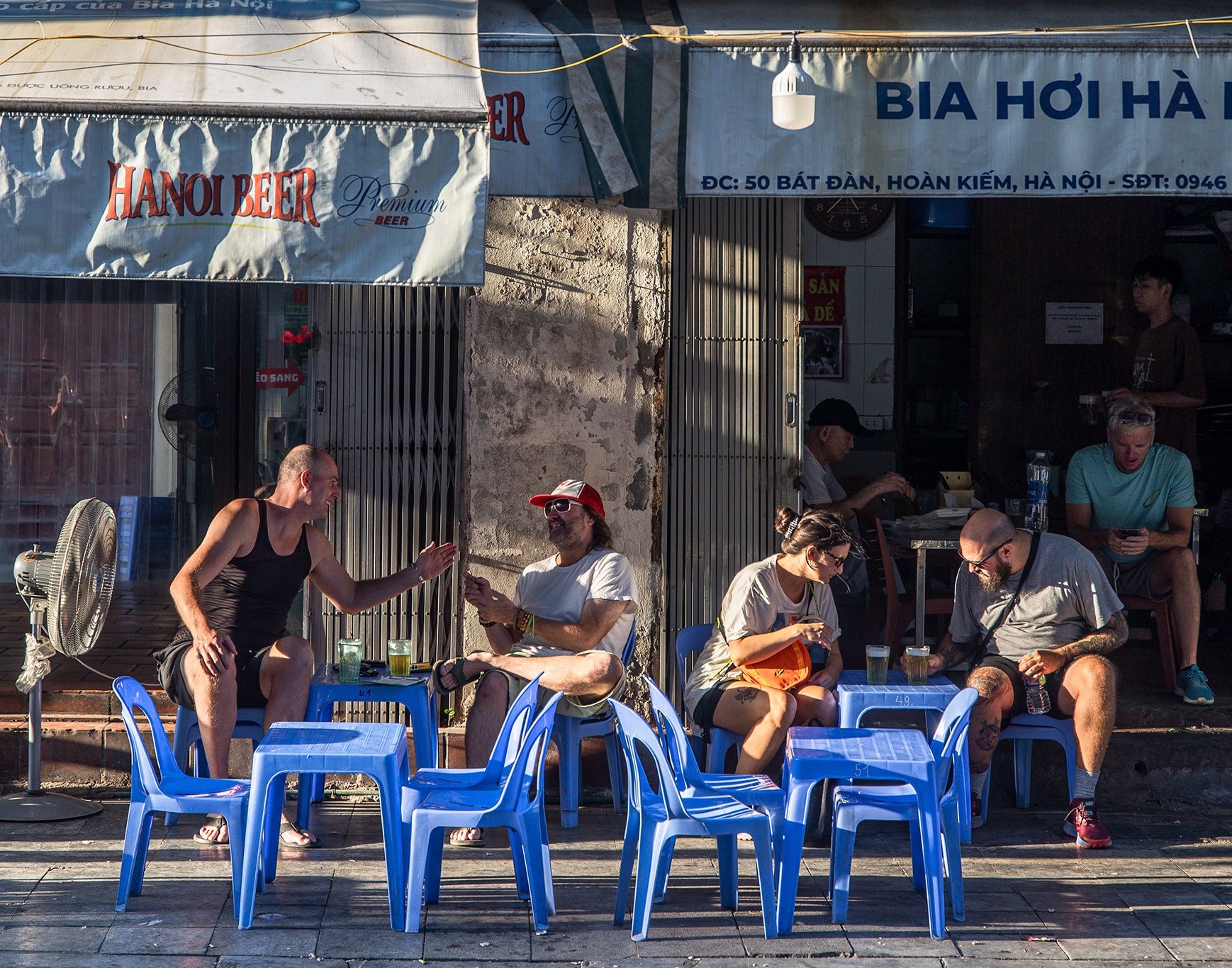
Social drinking, known as 'nhậu', operates on heavy participation and frequent toasting. When someone initiates a toast, everyone must join. The standard cheer is 'Một, hai, ba, dzô!' (One, two, three, cheers!). When clinking glasses with an elder, a boss, or someone of higher social status, consciously lower the rim of your glass slightly below theirs. This minor physical adjustment communicates deep respect.
📌 Expert Insight:
Vietnam enforces a strict 0.0 Blood Alcohol Concentration (BAC) limit for all drivers. Even a single beer can result in heavy fines, mandatory license suspension, and immediate motorbike confiscation. Rely entirely on taxis if you plan to drink.
During a nhậu session, never pour your own drink first. Pour for the people seated around you, ensuring their glasses remain full. Usually, someone else will notice your empty glass and return the favor. Use both hands to hold your glass when receiving a pour from an older individual.
(1).jpg)
What are essential logistics, e-visas, and modern digital etiquette?
You must secure your e-visa in advance, use ride-hailing applications to avoid transit scams, and adapt to the prevalent VietQR digital payment network. Establish correct street-crossing techniques and follow standardized tipping protocols to navigate urban centers safely. Physical cash remains necessary only for rural areas, as modern infrastructure heavily favors digital bank transfers.
Navigating ride-hailing apps and crossing the street
Crossing the street in cities like Hanoi or Ho Chi Minh City intimidates first-time visitors, but the traffic operates on predictable logic. To cross safely, adopt the 'Zen' method: step off the curb and walk at a slow, entirely steady pace. Maintain eye contact with approaching drivers. Use a raised, open hand to signal your presence. Above all, never stop suddenly or step backward. Motorbikes and cars calculate their trajectory based on your forward momentum; breaking that momentum causes accidents.
For transportation, abandon traditional street-hailing to avoid tampered meters. Download ride-hailing applications like Grab or Xanh SM (which utilizes a fleet of electric vehicles). These apps lock in the price beforehand and provide a digital map of your route. Expect local drivers to communicate via the chat function within the app, which automatically translates Vietnamese text into your native language.
(1).jpg)
Regarding entry logistics, process your mandatory e-visa strictly through the official government immigration portal at least two weeks before your flight. Print a physical copy of the approved PDF document. Border control agents require the paper copy for processing; showing a screenshot on your phone will result in delays.
Digital cashless payments and tipping standards
The economy has aggressively transitioned away from physical currency. Embracing the VietQR revolution is essential for efficient travel. Nearly every merchant, from high-end boutiques to curbside noodle vendors, displays a laminated QR code.
| Criteria | Service Provider | Expected Tip Range |
|---|---|---|
| Accommodation | Hotel Porters / Bellhops | 10,000 - 20,000 VND per bag |
| Tourism | Private Tour Guides | 50,000 - 100,000 VND per day |
| Dining | Upscale Restaurants | 5 - 10% (if no service charge) |
To initiate a digital payment, politely ask the vendor, 'Chuyển khoản?' (Bank transfer?). Scan the code using your banking app or integrated digital wallet. Once the transfer completes, show the vendor your 'successful transaction' screen. This visual confirmation is standard digital etiquette and prevents misunderstandings.
While historically accepted, quoting prices or attempting to pay with physical US Dollars is now obsolete and financially disadvantageous. The 2026 economic landscape heavily favors local currency. Always conduct transactions in Vietnamese Dong (VND), either digitally or via ATM withdrawals, to secure the correct conversion rate and avoid arbitrary markups by merchants.
ảnh CTA
---Related Articles---




Comments