To conquer Hanoi’s 36 Streets, you need more than just a map, you need the inside scoop. Forget the generic brochures. From the art of cyclo haggling to securing old-school train tickets and experiencing cutting-edge night tours, this is your ultimate survival guide. Seamless logistics, mouth-watering food, and rich history await. Let's dive in.
Hanoi is most inviting from April to June, especially in May when trees bloom, and from September to October. These transitional months offer cooler temperatures, clear skies, and highly comfortable weather for exploring outdoor historical sites and walking the city streets without excessive sweating.
Spring, running from February to April, brings a fine, persistent drizzle known locally as "mưa phùn". This light rain creates a highly atmospheric environment around West Lake, but you must pack a waterproof shell or light rain jacket. Temperatures remain mild, making long walking tours physically manageable. Furthermore, air quality tends to improve during these breezy spring mornings.
Summer stretches from May to August and introduces intense heat combined with extreme humidity. Daytime temperatures frequently exceed 35°C (95°F). You should plan your outdoor excursions for early morning or late afternoon, reserving midday hours for air-conditioned museums or cafes. Consequently, this hot weather perfectly complements the evening Bia Hoi (draft beer) culture, where locals gather on street corners to cool down.
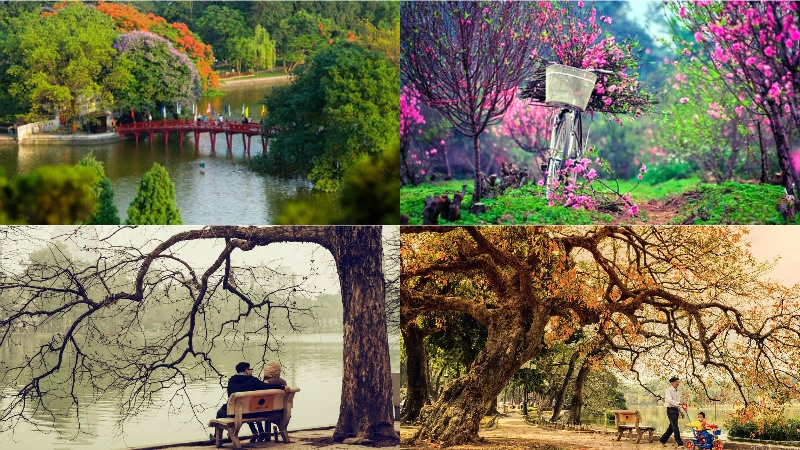
Autumn, from September to November, serves as the peak season for outdoor photography. The humidity breaks, revealing sharp, clear skies and golden afternoon light. You will find walking around Hoan Kiem Lake highly pleasant during this period. The transitional temperatures require only light clothing during the day and perhaps a light sweater for the evening.
Winter dominates December and January, dropping temperatures down to 10°C (50°F). Because traditional Hanoi architecture lacks central heating, the indoor cold often feels more piercing than the outdoor temperature. You must pack thermal layers and a windbreaker. Moreover, these crisp, chilly mornings provide the perfect excuse to sit on low plastic stools and consume a steaming bowl of hot Pho.
.jpg)
Noi Bai International Airport sits 45 kilometers from the Hanoi city center. Travelers can reach the Old Quarter in about 45 minutes using ride-hailing apps like Grab or Be, traditional metered airport taxis, or the extensive low-cost public bus network operating directly outside the arrival terminal.
Upon clearing customs at Terminal 2, immediately secure a local data connection via an eSIM or a physical SIM card purchased in the arrivals hall. You need active internet to properly arrange your ground transportation. Ignore the aggressive touts offering rides inside the terminal building; proceed directly outside to the clearly marked official taxi ranks or ride-hailing pickup lanes.
| Transfer Method | Time & Cost | Pros / Cons |
|---|---|---|
| Grab or Be App | 45 mins | $10-$20 USD | Pros: Fixed upfront pricing, no cash needed. Cons: Requires immediate internet access upon arrival. |
| Airport Taxi | 45 mins | $20-$30 USD | Pros: Zero wait time, available 24/7. Cons: Risk of meter tampering if you don't use official Mai Linh or Vinasun cars. |
| Public Bus (Express 86) | 60-75 mins | ~$1.50 USD | Pros: Extremely cheap, drops off near Old Quarter. Cons: Difficult to manage with heavy luggage, specific departure schedules. |
📌 Expert Insight:
Download the 'Be' app alongside Grab. It is a massive local competitor and often provides better pricing ($10-$20 for airport runs) and helps you gauge fair rates. Avoid Vietjet for tight schedules due to chronic delays; stick to Vietnam Airlines or Bamboo Airways.
Crossing the street in Hanoi requires strategy. You must maintain a slow, highly predictable walking pace. Do not stop abruptly or run. Scooter drivers continuously calculate your trajectory and will automatically steer around you. Once you commit to crossing, keep moving forward steadily.
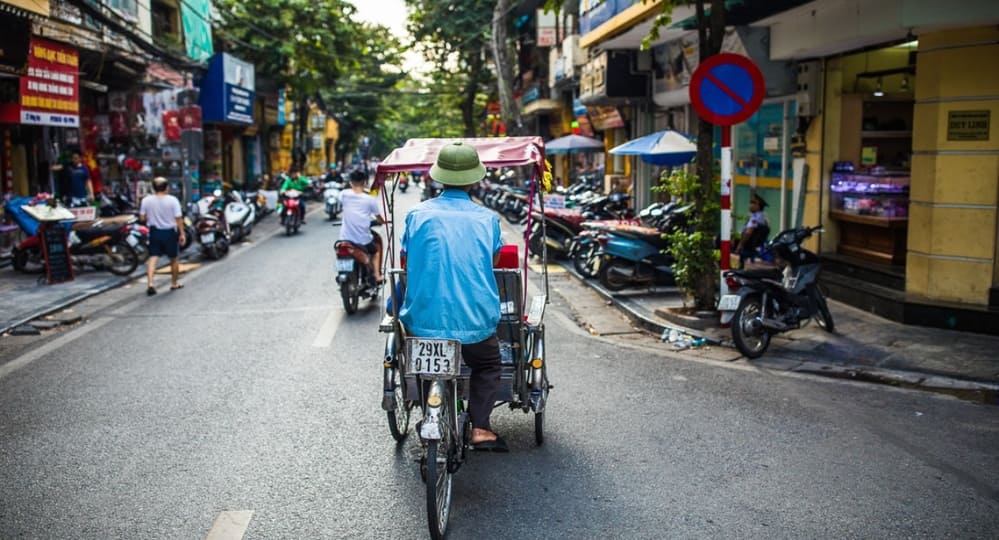
If you prefer a slower pace, hire a traditional cyclo. You should budget 200,000 to 400,000 VND ($8-$16) for a one-hour scenic pedicab ride through the historic center. Always agree on the total price for the ride before sitting down, firmly clarifying that the price covers all passengers, not a per-person rate.
For covering longer distances, utilize the double-decker sightseeing buses. Ticket options range from $8 for a 4-hour pass to $26 for a 48-hour pass. These buses provide an excellent elevated vantage point for photography and operate on an efficient loop connecting major historical monuments.
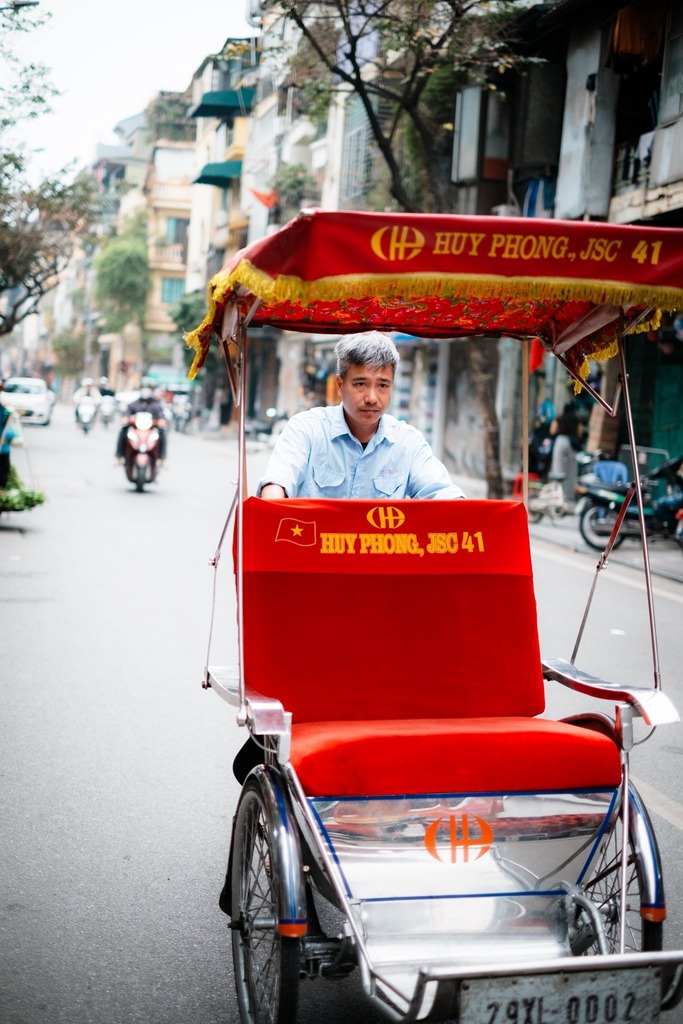
Hanoi Old Quarter is famous for its 36 narrow historic streets, traditional craft shops, and a highly active street food scene. It blends ancient commercial traditions with French colonial architecture, dense trade markets like Dong Xuan, and a vintage atmosphere filled with mopeds and boutique hotels.
📌 Expert Insight:
For the best Train Street experience without the tourist trap hassle, use the specific entrances at 224 Le Duan or 5 Tran Phu. Need cash? Skip the airport banks and visit Ha Trung Street in the Old Quarter for the best jewelry shop exchange rates.
The Old Quarter operates on a medieval guild system. Each of the 36 streets historically specialized in a single trade, and many retain this singular focus today. For instance, you will find Hang Bac entirely dedicated to silver processing, while Hang Gai exclusively trades in high-quality silk garments. Navigating these specific blocks offers insight into centuries-old supply chains.
Walking these streets demands constant spatial awareness. Local vendors use the sidewalks as moped parking zones and makeshift dining areas. Consequently, you will spend most of your time walking directly on the asphalt edge of the street, sharing space with slow-moving traffic and heavily loaded bicycles.
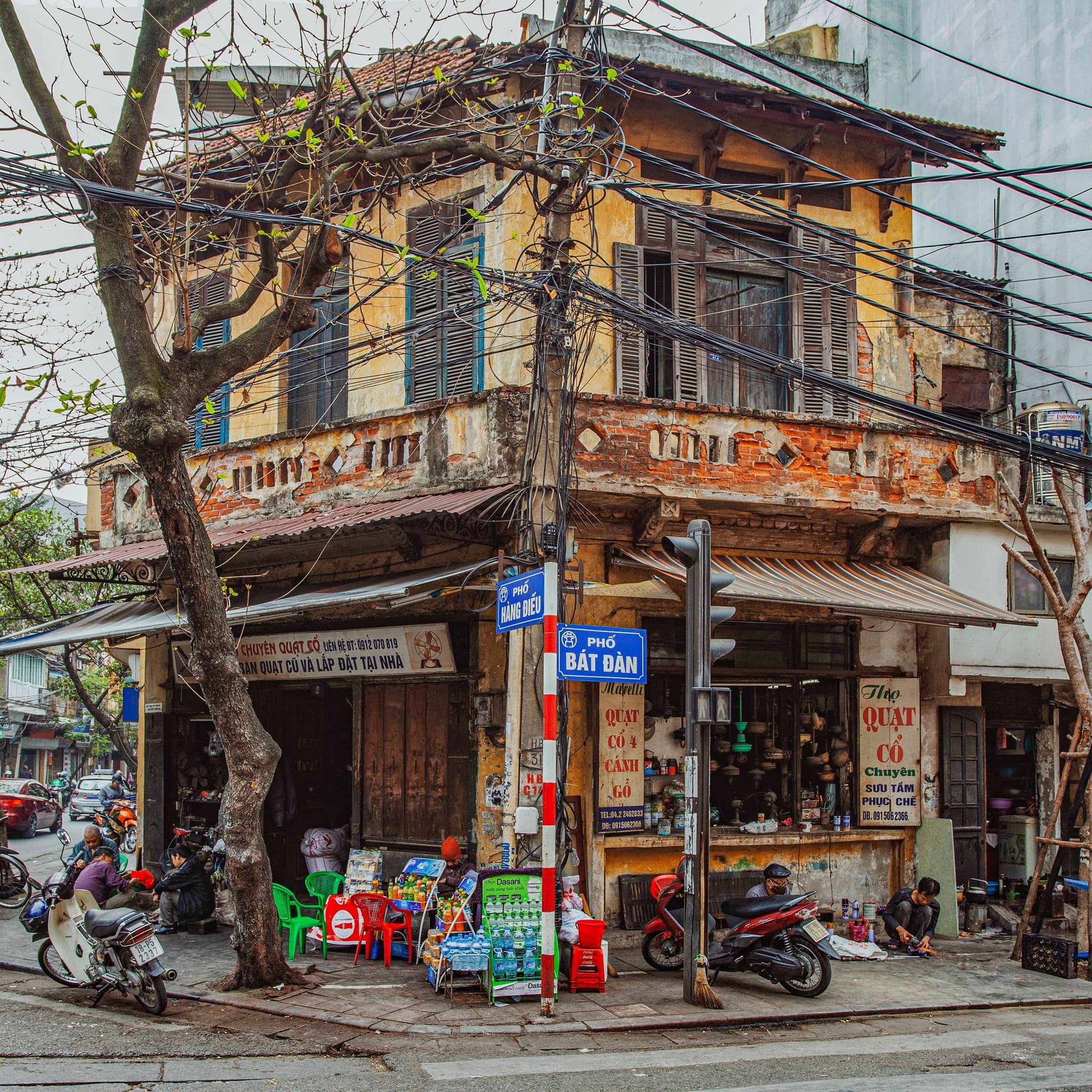
Northern Vietnamese cuisine focuses heavily on subtle balances rather than overwhelming spice. Hanoi’s version of Pho features a clear, highly savory bone broth. Locals explicitly reject the heavy hoisin sauce and basil garnishes favored in the south, opting instead for a squeeze of lime and mild chili. You must also try Bun Cha, consisting of charred pork patties swimming in a mild, sweet-and-sour fish sauce broth, typically eaten for lunch.
Banh Mi sandwiches provide crucial high-calorie fuel for walking tours, while the famous Egg Coffee (Ca phe trung) serves as a liquid dessert. Baristas whip egg yolks with condensed milk into a thick, meringue-like foam that sits atop strong robusta espresso. It tastes remarkably similar to a rich tiramisu.
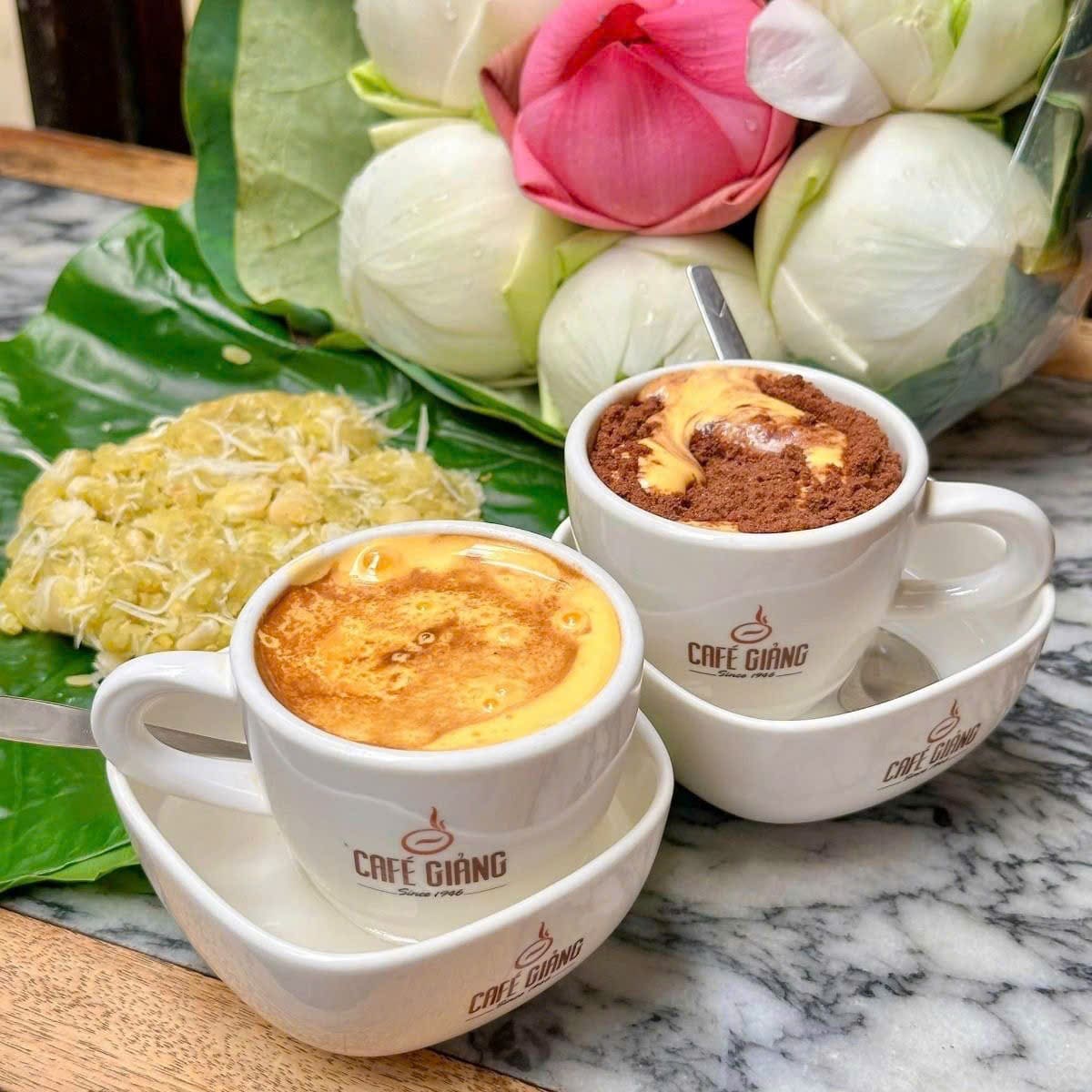
For a high-value gastronomic experience, seek out Cha Ca La Vong. This regional specialty features turmeric-marinated white fish grilled tableside with massive bunches of fresh dill and spring onions. When the sun sets, head to Ta Hien (Beer Street). Experience authentic Hanoi beer culture here on weekends when the Hoan Kiem Pedestrian Zone activates from Friday at 7 PM to Sunday at midnight, transforming the dense intersection into an open-air pub.
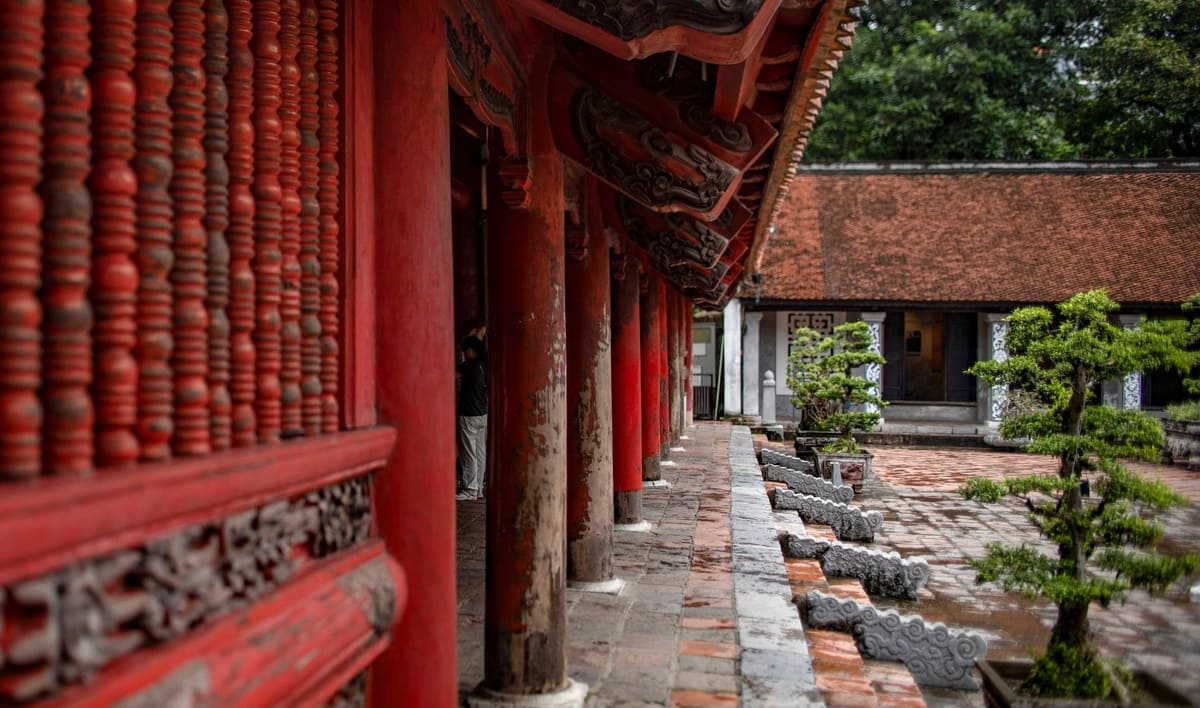
Key historical sites include the Hanoi Old Quarter, Hoan Kiem Lake, the Ho Chi Minh Mausoleum, the Imperial Citadel of Thang Long, the Temple of Literature, Hoa Lo Prison, and the Vietnam Military History Museum. These landmarks heavily document the complex political and cultural evolution of the nation.
The Ho Chi Minh Mausoleum dominates Ba Dinh Square. Entry is entirely free, but the complex opens strictly during morning hours and heavily enforces a Monday and Friday closure. You must dress conservatively, covering shoulders and knees. Security guards require visitors to walk in absolute silence with their hands out of their pockets.
.jpg)
The Imperial Citadel of Thang Long requires a 100,000 VND ($4.00) entrance fee. This UNESCO site served as the political center of the country for 13 consecutive centuries. Allow at least two hours to properly inspect the ancient stone foundations and the deep underground military bunkers utilized during the Vietnam War.
.jpg)
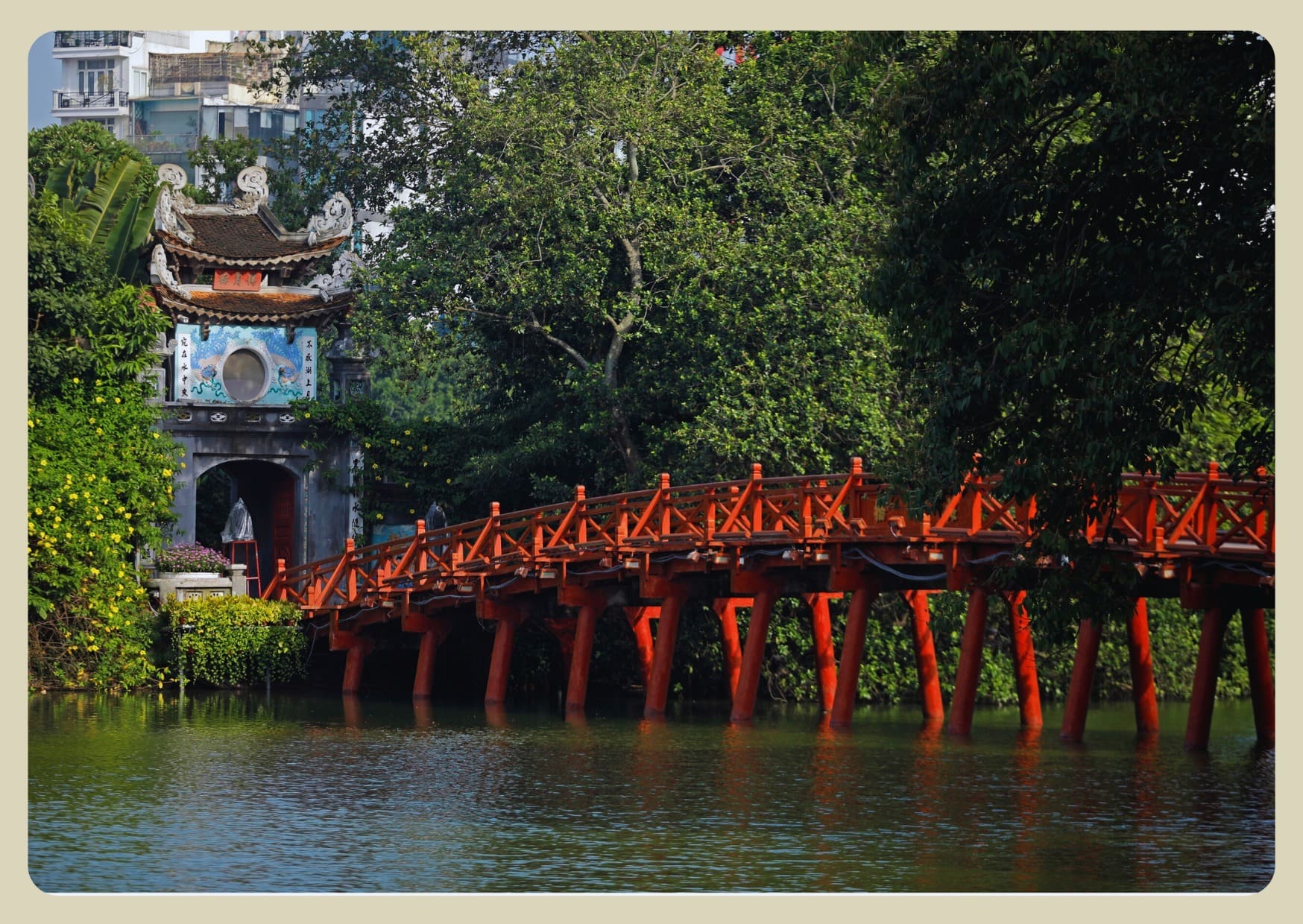
For religious architecture, visit the Quan Thanh Temple and Ngoc Son Temple, costing 10,000 VND and 30,000 VND respectively. Ngoc Son sits on a small island within Hoan Kiem Lake, accessible via the highly photogenic red wooden Huc Bridge. It offers an excellent shaded retreat from the afternoon heat.
📌 Expert Insight:
Night tourism is the hottest trend. Don't miss the 'Sacred Night' live-actor reenactment at Hoa Lo Prison (50,000 VND) or the 'Quintessence of Scholarly Way' 3D mapping show at the Temple of Literature (199,000 VND for night entry).
Historical monuments now extend their hours to accommodate sophisticated evening programming. The cooler temperatures allow you to comfortably explore unshaded courtyards. The Temple of Literature utilizes advanced projection mapping to display ancient scholarly texts directly onto centuries-old stone stelae, fundamentally changing how visitors interact with the site.
.jpg)
Traditional water puppet theater originated in the flooded rice paddies of the Red River Delta. You can purchase tickets ranging from 100,000 to 200,000 VND ($4-$8) at the specialized theater near Hoan Kiem Lake. The one-hour performance uses live folk music and wooden puppets manipulated on a liquid stage to depict rural agricultural legends.
For a massive outdoor spectacle, book tickets to The Quintessence of Tonkin. This high-budget production utilizes hundreds of local farmers as actors, set against a natural mountain backdrop. The score features the traditional dan bau (a single-stringed monochord), offering a deeper dive into authentic delta culture.
.jpg)
The Hanoi Opera House remains a stunning relic of French colonial architecture. Modeled directly after the Palais Garnier in Paris, it hosts premium arts, including classical ballet and symphonic music. You cannot enter for a casual daytime tour; you must purchase a ticket for a scheduled evening performance to view the grand interior staircases.
Hanoi serves as the ultimate strategic hub for North Vietnam. Thanks to modernized highways, day trips to artisan villages and onward travel to Halong Bay, Sapa, and Ninh Binh are faster and highly efficient for international travelers managing strict itineraries.
Bat Trang sits just 13 kilometers southeast of the city center. This village is famous for traditional pottery, operating massive high-heat kilns year-round. You can purchase export-quality ceramics directly from the factory floors at steep discounts or participate in shaping your own clay bowls.

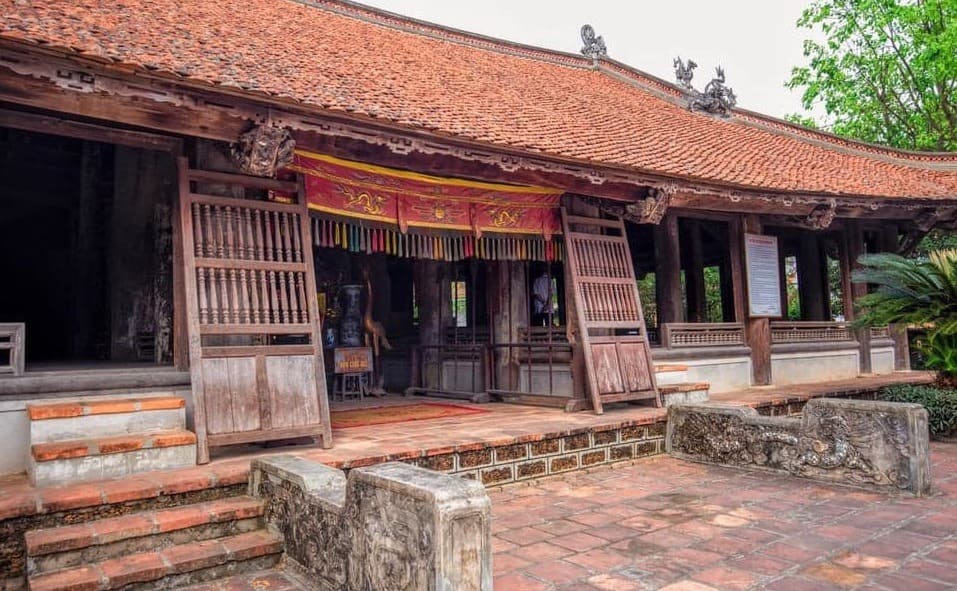
Duong Lam preserves highly specific ancient village architecture. Residents maintain centuries-old courtyard homes constructed from distinct laterite bricks. This porous red stone provides a sharp visual contrast to the modern concrete sprawl found in the outer city districts.
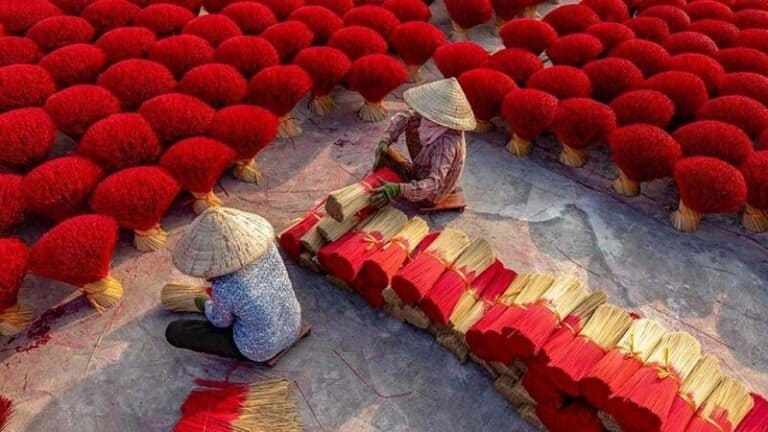
Quang Phu Cau functions as the primary incense-producing village for the region. To capture the visually striking yellow and red photography synonymous with the location, you must arrive before 9:00 AM. Workers arrange thousands of freshly dyed incense sticks into massive geometric drying formations, creating high-contrast patterns against the pavement.
📌 Expert Insight:
The brand-new Hanoi - 5 Gates train to Bac Ninh does NOT sell tickets online. To buy tickets, you must physically go to Ga Ha Noi (Hanoi Station). Go directly to the ticket counter, bring Vietnamese Dong in cash, and have a translation app ready to request 'One-way to Bac Ninh'.
Navigating Ga Ha Noi requires patience. The main terminal lacks clear English signage, and the ticket clerks operate entirely in Vietnamese. You should prepare your exact route, travel dates, and preferred class on your smartphone beforehand. Handing your phone directly to the clerk with the translated text eliminates costly booking errors.
Modernized infrastructure heavily reduces transit times to northern destinations. The completion of the expressway has cut the driving time to Halong Bay in half, making single-day cruises structurally possible, though overnight boat stays remain highly recommended.
| Transport Mode | Route & Duration | Cost & Considerations |
|---|---|---|
| Limousine Bus | Halong (2.5h) / Ninh Binh (1.5-2h) | $10-$15. Fast and cheap. Features luxury leather seats and USB ports. Requires meeting at a designated pickup point. |
| Sleeper Train | Sapa via Lao Cai (8+ hours) | $30-$45. Saves a hotel night. Offers flat beds but operates on noisy, older tracks. Drops off 45 mins outside Sapa center. |
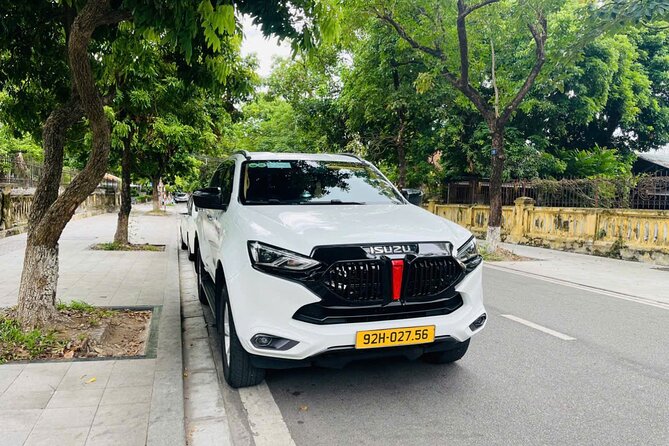
| Private Car | Sapa (5-6h) / Halong (2h) | $80-$150. Fast and highly convenient. Offers door-to-door hotel service and flexible departure times, but remains the most expensive option. |
Hanoi is best for travelers seeking 1,000 years of deep history, French colonial architecture, and four distinct seasons. Ho Chi Minh City remains ideal for those looking for a fast-paced, highly modernized metropolis, dense nightlife districts, and a tropical year-round climate.
History strongly dictates the physical layout of each city. Hanoi centers entirely on ancient commercial traditions, tightly packed historical streets, and severe government building regulations that preserve a low-slung skyline. You navigate tightly knit neighborhoods that prioritize localized street life over sweeping modernization.
Conversely, Ho Chi Minh City (HCMC) showcases rapid economic expansion. It operates as a sprawling hub of glass skyscrapers, corporate headquarters, and deep Vietnam War history. The southern capital moves at an aggressive pace, boasting later dining hours, wider multi-lane boulevards, and upcoming underground metro infrastructure.
.jpg)
Your ultimate choice depends heavily on your tolerance for weather and structural chaos. Hanoi forces you to adapt to its chaotic charm and pronounced seasonal shifts. HCMC provides a highly predictable hot, tropical climate while offering a slightly more westernized, business-focused approach to urban planning.
ảnh CTA
Best visited during dry season (November to April) for ideal weather.
Book accommodations in advance during peak travel season.
Carry local currency (Vietnamese Dong) for markets and small vendors.
Respect local customs and dress modestly when visiting temples.





Hanoi, Vietnam
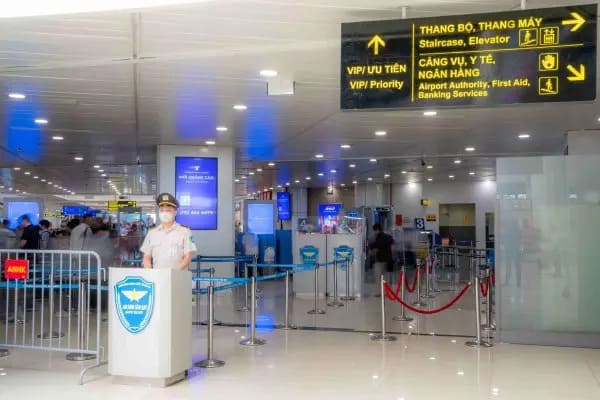
Walk past the immigration queue at Noi Bai Airport. A dedicated Sondax escort guides you through priority lanes — typically done in under 20 minutes.

Ho Chi Minh City, Vietnam
Beat the immigration queue at Tan Son Nhat Airport. Our team escorts you through priority lanes — arrival or departure done in under 30 minutes.
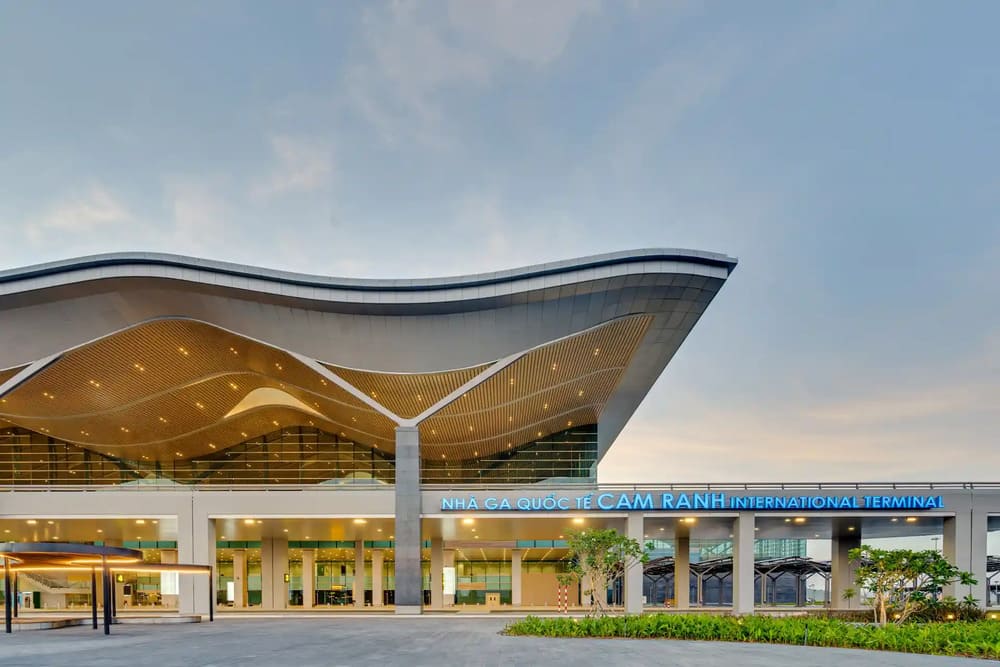
Nha Trang, Vietnam
Priority immigration clearance at Cam Ranh International Airport. Quick entry to Nha Trang.
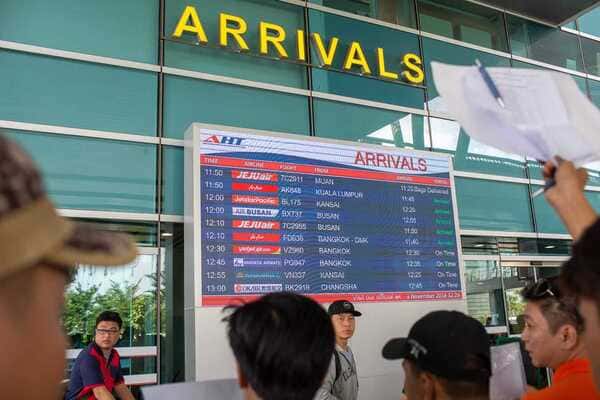
Da Nang, Vietnam
Priority immigration clearance at Da Nang International Airport. Skip the queue and clear immigration quickly.

Phu Quoc, Vietnam
Priority immigration clearance at Phu Quoc International Airport. Fast entry to paradise island.