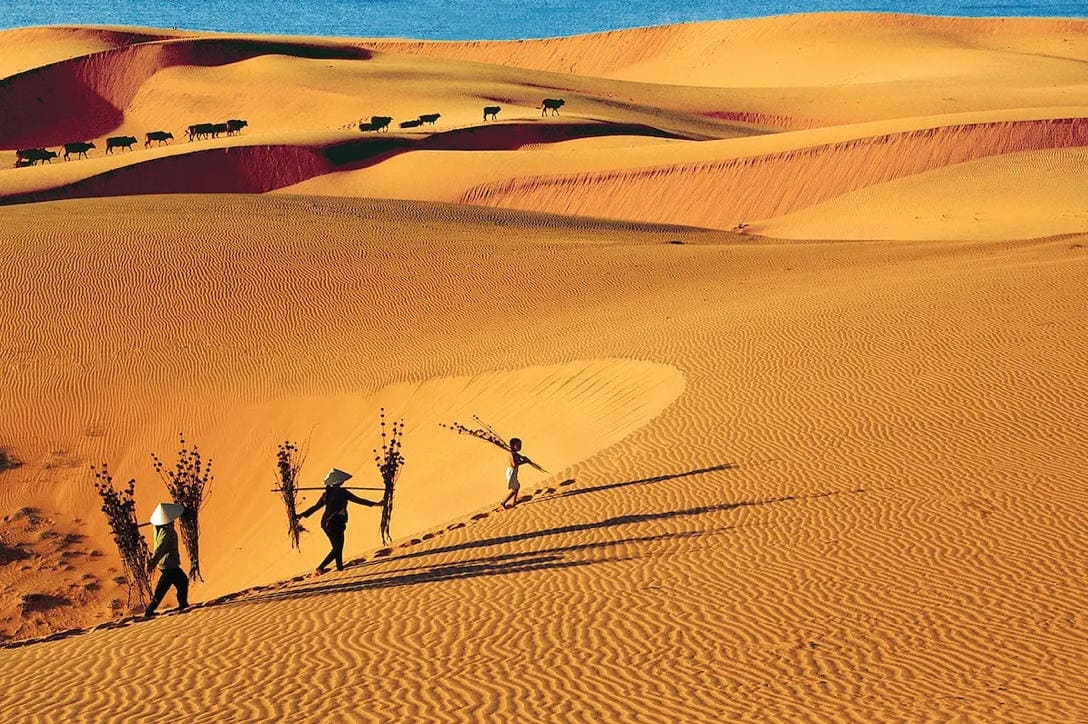

Fast-moving quad bikes speed up and down the White Sand Dunes, requiring visitors to stay highly alert while navigating unregulated rentals. Securing the two-hour luxury minibus from Ho Chi Minh City to Binh Thuan Province is only half the battle. Arriving unprepared for coastal winds and aggressive tour operators costs time and money. This itinerary solves the logistics.
Mui Ne is worth visiting for travelers seeking distinct microclimates, characterized by the Red and White Sand Dunes. Located exactly 220 kilometers east of Ho Chi Minh City, it serves as a prominent hub for windsurfing and kitesurfing due to consistent thermal winds from November to April. You will notice a stark contrast between the arid desert geography inland and the tropical waters facing the East Sea.
The rapid $500-million infrastructure development of the Dau Giay-Phan Thiet Expressway cut travel time from over four hours down to two and a half hours, making the region highly accessible. Allocate two to three full days here if you want to balance intensive outdoor sports with exploration of the active maritime economy.
.jpg)
Mui Ne is geologically unique for its coastal sand dunes, specifically the White Sand Dunes (Bau Trang) and the Red Sand Dunes. Additionally, the Fairy Stream (Suoi Tien) features dramatic clay formations, while the area remains an active fishing port centered around traditional round bamboo coracles. Local fishermen construct these heavy basket boats using woven bamboo coated in waterproof resin, dragging them ashore daily to offload massive nets.
You can walk ankle-deep through the Fairy Stream's warm water canyon, flanked by 15-meter-high limestone walls and dense jungle foliage. The main harbor reveals hundreds of brightly painted fishing vessels hauling in the daily catch of squid and scallops at dawn, anchoring a maritime industry that defines the province.
.jpg)
| Criteria | White Sand Dunes (Bau Trang) | Red Sand Dunes |
|---|---|---|
| Distance from central Ham Tien | 25 kilometers northeast along the coastal road | 11 kilometers east near the fishing village |
| Key Activities | Quad biking, open-top Jeep tours, photography | Sandboarding, walking, coastal sunset viewing |
| Scale | Massive, deep Sahara-like peaks surrounding a lotus lake | Smaller, highly accessible slopes featuring iron-rich reddish sand |
| Best Visit Time | 4:30 AM to catch the sunrise over the freshwater lake | 4:30 PM to watch the sunset directly over the ocean horizon |
.jpg)
The optimal period to visit Mui Ne is between November and April. During these dry season months, northeast monsoon winds create ideal conditions for water sports, while average temperatures remain stable around 27 degrees Celsius with minimal rainfall, ensuring clear access to outdoor geological sites. Avoid the rainy season peak spanning September and October, as heavy downpours wash out rural roads and turn the clear waters of the Fairy Stream into muddy runoff. Kitesurfing schools operate at full capacity from December through February, capitalizing on powerful cross-onshore winds blowing consistently between 15 and 25 knots.
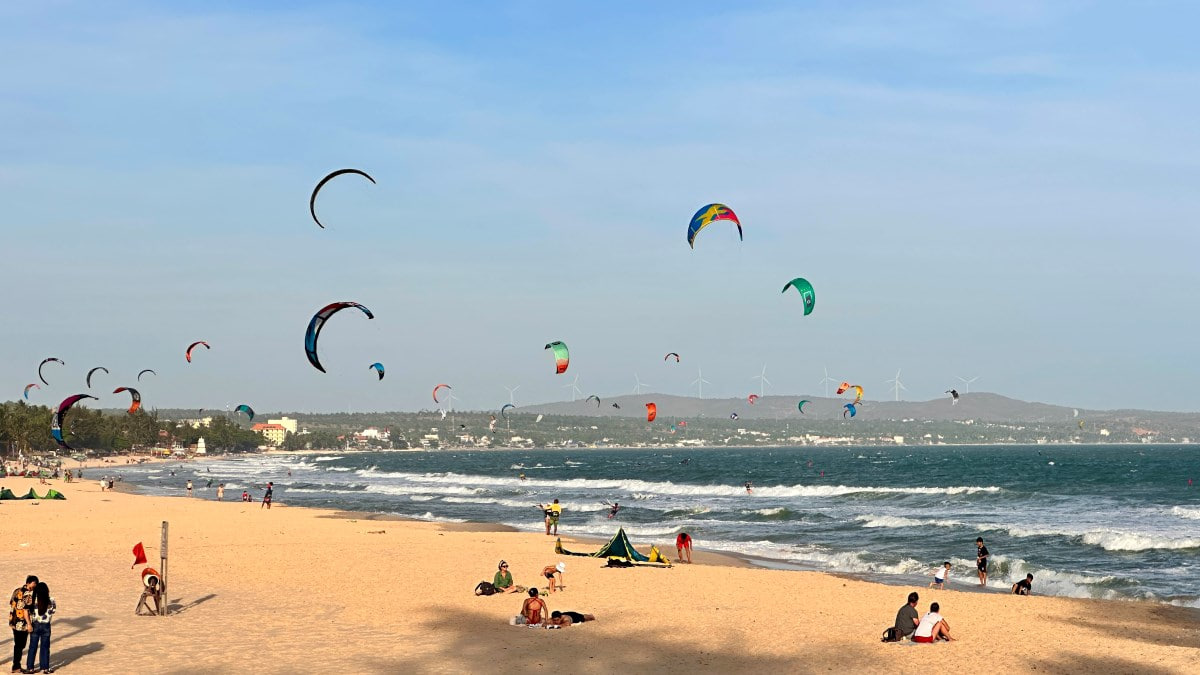
The main tourist beach areas along Nguyen Dinh Chieu Street suffer from severe coastal erosion and choppy surf during the peak monsoon. Beginners struggling to navigate these aggressive waves risk damaging expensive boards and sails against the concrete sea walls flanking the major resorts.
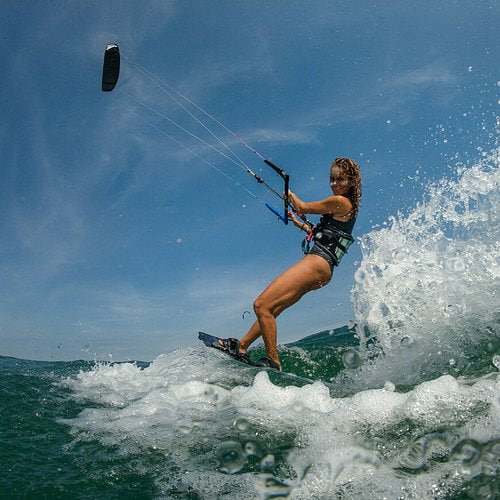
📌 Insider note:
Escape the high winds and heavy shore break of Ham Tien Beach by hiring a taxi to Hon Rom or Ganh Beach. These protected bays offer flat, waist-deep water perfect for novice kitesurfers and safe swimming, located just 15 minutes north of the central resort strip.
A day trip from Ho Chi Minh City to Mui Ne is feasible but demanding. Utilizing the Dau Giay-Phan Thiet Expressway, transit takes approximately 2.5 to 3 hours each way. Visitors typically hire private drivers or use limousine buses to maximize their limited sightseeing hours.
You will spend a minimum of five hours on the road, leaving little room for error or traffic delays. A strict schedule guarantees enough daylight to climb the sand dunes, walk the Fairy Stream, and eat lunch before the return journey. Private vehicle hire costs approximately 2,200,000 VND ($86 USD) for a seven-seater SUV, allowing you to bypass bus terminal queues entirely.
.jpg)
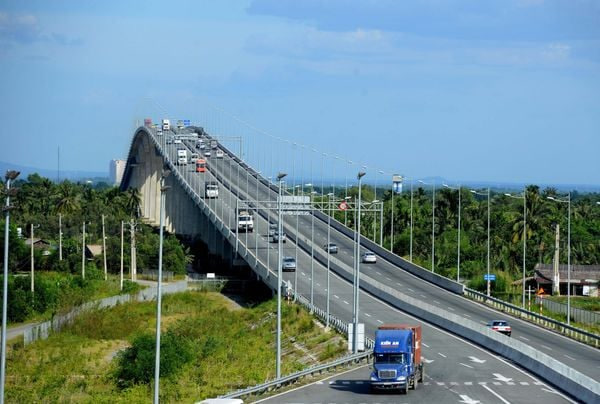
Getting to the coast requires navigating multiple transport companies operating out of District 1 or the airport. Choose your method based on luggage capacity, budget constraints, and your tolerance for transit delays. Book your seats online via portals like Vexere to secure specific spots rather than buying tickets from roadside vendors.

Trains operate daily out of Saigon Railway Station in Ho Chi Minh City, arriving at Phan Thiet Station situated roughly 15 kilometers from the Mui Ne tourist strip. Sleeper buses run directly from Pham Ngu Lao street in District 1 and drop you right at your resort's front door.
📌 Insider note:
A standard sleeper bus costs just 200,000 VND ($8 USD) and takes four hours, dropping you directly in Ham Tien. However, if you carry rigid kitesurfing twin-tips or massive foil boards, the narrow bus cargo holds will not accommodate them. Take the SPT2 train from Saigon Station to Phan Thiet Station instead; the generous baggage allowance easily fits bulky sports equipment.
.jpg)
Taxis stationed at the Phan Thiet train station demand aggressive haggling, with unmetered drivers frequently quoting triple the standard fare to arriving tourists. Bypass the chaotic taxi rank entirely by relying on regulated mobile applications. Grab operates robustly across Binh Thuan Province, offering transparent, fixed pricing for the 30-minute drive out to the central resort zones.

Fast-moving quad bikes present major hazards for pedestrians exploring the dunes. Travelers must remain highly alert and thoroughly inspect all rental equipment before finalizing payments, as many independent operators skip basic maintenance checks and omit safety instructions. Unlicensed operators patrol the highway shoulder near Bau Trang, intercepting tourists before they reach the official visitor center.
Sandboarding vendors regularly approach tourists at the Red Sand Dunes, aggressively pushing thin plastic sleds into their hands and demanding excessive tips after a single slide. Negotiate the sled rental for 30,000 VND ($1.20 USD) upfront and refuse unsolicited assistance dragging the board back up the hill to avoid extortion.
.jpg)
Historically, Mui Ne attracted a high volume of Russian tourists, resulting in cyrillic signage and Russian-speaking staff across Ham Tien ward. While domestic tourism and travelers from other European nations have diversified the demographic since 2020, Russian influence remains visible in local restaurant menus and business services. You will find several pharmacies, travel agencies, and supermarkets catering directly to Eastern European expatriates.
Signs advertising pelmeni and imported vodka sit right next to local seafood menus on Nguyen Dinh Chieu Street. This specific demographic density peaked around 2014, but regular charter flights routing through Cam Ranh International Airport ensure a steady seasonal flow of Russian holidaymakers seeking affordable winter weather.
.jpg)
Visitors must wear modest clothing covering their shoulders and knees when entering the 8th-century Po Shanu Cham Towers. The security guards strictly enforce this dress code at the ticket gate, requiring tourists in swimsuits or tank tops to rent sarongs for 10,000 VND ($0.40 USD) before walking the temple grounds.
Authentic Banh Can is best found along Hai Thuong Lan Ong Street in central Phan Thiet, served fresh from street-side terracotta griddles. These bite-sized rice flour pancakes cost roughly 35,000 VND ($1.40 USD) per plate and come submerged in a savory broth with quail eggs, minced pork, and fresh mango.
A private half-day sunrise jeep tour costs between $20 and $25 USD per vehicle, accommodating up to four passengers. The four-hour itinerary typically begins at 4:30 AM, transporting you to the White Sand Dunes, Red Sand Dunes, the fishing village, and finally the Fairy Stream before breakfast service ends.
Reliable ATMs are scarce in the central fishing village, with the highest concentration of secure cash machines located further west along Nguyen Dinh Chieu Street. Agribank and Vietcombank maintain 24-hour kiosks near the Ham Tien market, charging standard withdrawal fees around 50,000 VND ($2 USD) for international debit cards.
CTA
Best visited during dry season (November to April) for ideal weather.
Book accommodations in advance during peak travel season.
Carry local currency (Vietnamese Dong) for markets and small vendors.
Respect local customs and dress modestly when visiting temples.