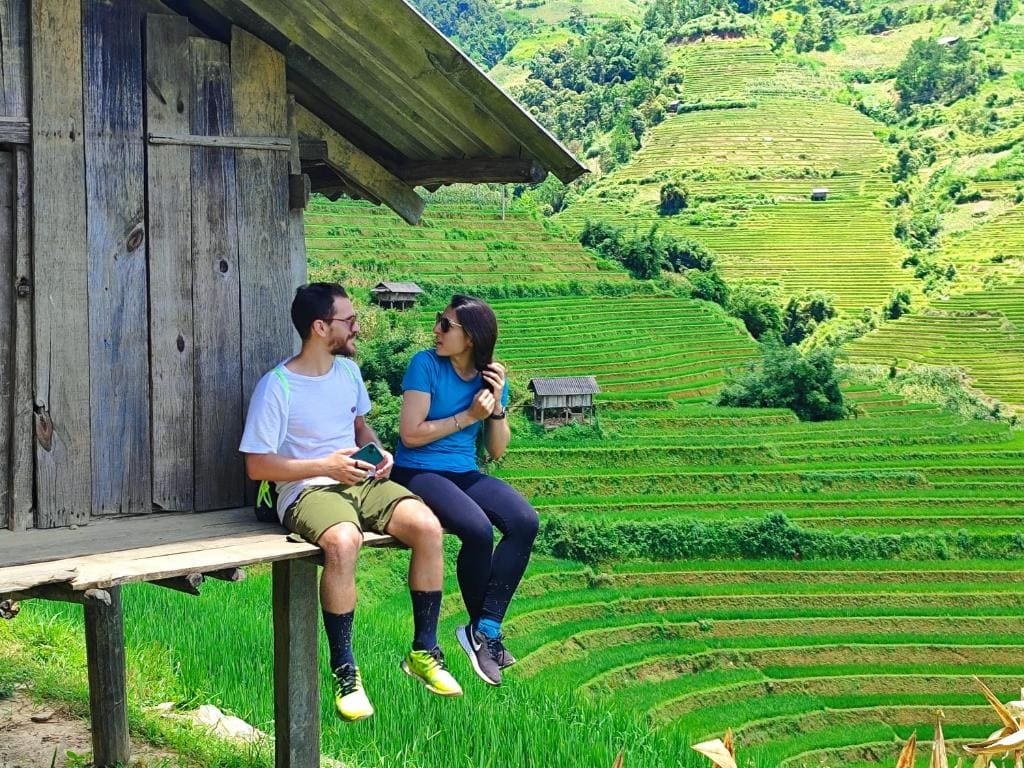

Eight and a half hours on a sleeper bus from Hanoi brings you to 2,200 hectares of mountain terraces, but it also drops you into highly winding terrain where non-riders often feel stranded. Figuring out how to navigate steep passes without a motorcycle license separates a relaxing highland trek from an insurance nightmare. This guide fixes the logistics.
Mu Cang Chai is famous for its 2,200 hectares of terraced rice fields, particularly the Mam Xoi and Ba Nha viewpoints. These hand-carved agricultural structures, cultivated by the Hmong ethnic group, were designated as a National Landscape site by the Ministry of Culture, Sports, and Tourism in 2007. The terraces blanket the slopes of the Hoang Lien Son mountain range, sitting at an average altitude of 1,000 meters above sea level.
.jpg)
The Hmong engineered these fields over centuries to solve the problem of steep-grade farming. They cut flat shelves into the mountain contours and reinforced the edges with packed mud walls to hold back rainwater. Bamboo pipes channel water from natural mountain streams at the peak down through each consecutive level, creating an automated gravity-fed irrigation system that sustains the crop through the dry months.
Travelers reach Mu Cang Chai from Hanoi by traversing 280 kilometers along National Route 32. Overland options include scheduled sleeper buses from My Dinh Bus Station or private limousine vans, with journeys requiring six to seven hours to cross the steep Khau Pha Pass. The road conditions shift drastically once you pass the town of Nghia Lo. The pavement narrows, guardrails disappear in several sections, and heavy transport trucks dominate the center line.
Most sleeper buses depart Hanoi late at night, typically around 9:00 PM or 10:00 PM. This schedule puts you in Mu Cang Chai town between 4:00 AM and 5:00 AM. Private limousine vans offer daytime departures, usually leaving Hanoi at 7:00 AM. These nine-seat Ford Transit or Hyundai Solati vans provide better suspension for the mountain roads, but you pay a premium of around 400,000 VND (15.75 USD) compared to the standard sleeper bus fare of 250,000 VND (9.85 USD).
.jpg)
📌 Insider note:
Use the Vexere booking platform to secure official sleeper bus tickets and assigned beds, ignoring the aggressive taxi drivers swarming the My Dinh Bus Station drop-off area. Once onboard, message your ecolodge staff to coordinate your specific sleeper bus drop-off at the Do 1 Nam Khat mountain junction before you lose cellular service crossing the pass.
Getting to Mu Cang Chai is straightforward, but moving between the scattered viewpoints requires serious planning if you lack a Vietnamese motorcycle license. The distances between La Pan Tan and Che Cu Nha span over 15 kilometers of steep, unpaved dirt tracks. Relying on taxis proves impossible, as standard cars cannot clear the deep ruts and sharp switchbacks leading to the upper terraces.
.jpg)
| Transit Option | Average Cost USD | Travel Time | Safety & Insurance Implications | Best For |
|---|---|---|---|---|
| Private Car Transfer | $60 - $80 per day | Slowest due to narrow road widths | High safety; covers standard travel insurance if booked via a licensed travel agency. | Families and groups avoiding rain exposure. |
| Self-drive Scooter from Nghia Lo | $6 - $8 per day | Highly flexible timing | High physical risk; invalidates standard medical insurance without a valid Vietnamese motorcycle license. | Highly experienced riders with international permits. |
| Pre-vetted Easy Rider via Homestay | $25 - $35 per day | Fastest transit on narrow dirt tracks | Homestay handles driver vetting, but you must check the provided helmet quality yourself before departing. | Solo non-riders needing access to steep terrace trails. |
.jpg)
.jpg)
The optimal periods to visit are the watering season from May to June and the harvest season from September to October. During these months, the terraces display either mirror-like water surfaces or yellow rice stalks, attracting photographers to Yen Bai Province. The window for peak yellow color is narrow. Once the stalks reach full maturity in late September, farming families cut the entire crop within a two-week timeframe.
If you visit in May, you witness the "pouring water" season. Farmers direct the heavy spring rains into the dry fields, transforming the brown earth into massive reflecting pools. Clear mornings during this season offer sharp reflections of the sky and passing clouds. Book your homestay at least two months in advance if you plan to arrive during the first week of October, as domestic tourism peaks around the annual paragliding festival.
.jpg)
The most significant rice terraces are situated in the communes of La Pan Tan, Che Cu Nha, and Ze Xu Phinh. La Pan Tan features the iconic circular Mam Xoi Hill, which is classified as a national heritage site by Vietnamese authorities. You cannot drive a standard car to Mam Xoi. Visitors park at the base of the mountain and pay local xe om drivers 50,000 VND (2 USD) for a round-trip lift up the heavily rutted two-kilometer access road.
Che Cu Nha holds the highest elevation terraces in the district. The steep gradient here produces narrower shelves, requiring a rigorous uphill hike from the main road.
.jpg)
Ze Xu Phinh offers a quieter alternative to the crowds at La Pan Tan. The terraces here sit closer to the valley floor, making them accessible via a moderate 30-minute walk from the district center. Arrive at Ze Xu Phinh before 8:00 AM to catch the morning fog burning off the ridges.
The Khau Pha Pass is the primary mountain pass leading to the district. Rising over 1,200 meters above sea level and extending 30 kilometers, it ranks as one of the four major mountain passes in northern Vietnam, connecting Van Chan and Mu Cang Chai. The name translates to "Horn of Heaven" in the local Thai language, referencing the pass's jagged peak that frequently pierces through low-hanging cloud cover.
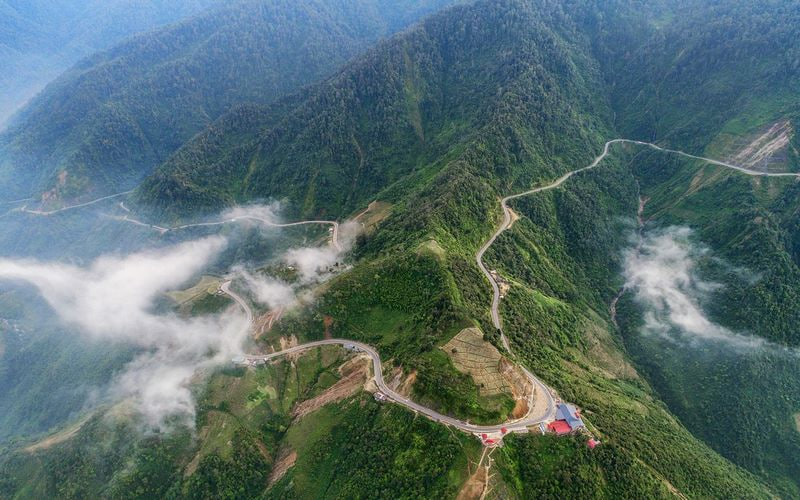
Navigating Khau Pha requires caution. Thick fog often reduces visibility to less than 10 meters, particularly during the December and January winter months. The temperature drops by at least five degrees Celsius as you approach the summit.
Pack a windbreaker in your day bag even if you depart Nghia Lo in heavy heat. Landslides pose a severe threat along the pass during July and August, occasionally blocking all traffic for hours.
.jpg)
The population of Mu Cang Chai consists predominantly of the Black Hmong and White Thai ethnic groups. Their daily lives revolve around agriculture and textile production, not tourism. Approaching their villages requires an understanding of basic privacy boundaries. Walking uninvited into a family courtyard to inspect their loom or livestock crosses a hard line.
.jpg)
📌 Insider note:
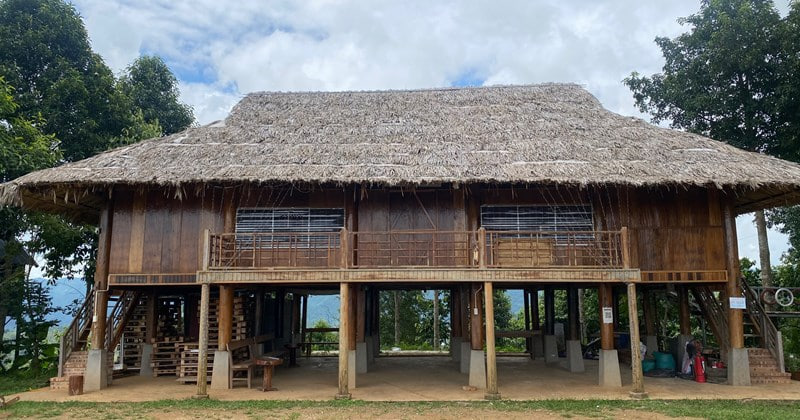
Never lean against or hang wet clothing on the thick central structural pillar of a traditional Hmong or Thai stilt house. This specific column houses the domestic guardian spirit. You must also avoid pointing your feet toward the family altar or sleeping directly underneath it, as host families consider these actions highly offensive to their ancestors.
Beyond the agricultural engineering of the terraces, the district offers dense pine and bamboo forests. The terrain demands high physical fitness. Trekking routes rarely feature paved steps or handrails, relying instead on centuries-old buffalo tracks that cut straight up the mountain spines. Proper hiking boots with aggressive tread are non-negotiable for handling the wet clay.
.jpg)
| Local Specialty | Typical Cost | Where to Find It | Unique Characteristic | Best Time to Try |
|---|---|---|---|---|
| Hmong Black Chicken | $12 - $15 USD per whole bird | Homestays in Nam Khat and La Pan Tan | Distinctive black skin and bones, typically boiled in broth with wild mountain herbs. | After a long trekking day in cold evening weather. |
| Five-color Sticky Rice | $2 - $3 USD per plate | Local morning markets in Mu Cang Chai town | Dyed using natural forest leaves to create purple, red, green, yellow, and white grains. | Early morning breakfast before initiating a heavy hike. |
| Tu Le Local Sticky Rice | $3 - $4 USD per kilogram | Street stalls along the road in Tu Le commune | Known for its soft texture and nutty aroma, grown exclusively in the specific Tu Le valley soil. | As a mid-day snack while stopping to cross the Khau Pha Pass. |
| Suoi Khoang Nong Ngoc Chien Muong La Hot Springs | $1.50 - $2 USD entry fee | Ngoc Chien commune, near the Son La province border | Natural geothermal water channeled directly into public stone pools. | Evening muscle recovery during the cool months of November and December. |
A standard dormitory bed in a local stilt house costs between $6 and $10 USD per night. Private rooms with shared bathrooms range from $15 to $25 USD. Premium options, like the Mu Cang Chai Ecolodge, charge approximately $60 to $85 USD for private bungalows with valley views.
Tipping remains completely optional in Yen Bai Province, but guides appreciate receiving an extra $4 to $6 USD for a full day of trekking. Direct financial support goes further when you purchase handmade textiles directly from your guide’s family rather than handing over unearned cash.
Landslides occur frequently on National Route 32 between July and August when heavy monsoon rains saturate the mountain slopes. Road clearing crews often block traffic for up to four hours near Khau Pha Pass. Check the official Yen Bai provincial weather advisories before starting your drive.
Tap water in rural Yen Bai stilt houses comes directly from untreated mountain streams and carries bacteria that cause severe gastrointestinal distress. Always purchase factory-sealed bottled water or ask your homestay host to provide water that has been actively boiled for at least three minutes.
CTA
Best visited during dry season (November to April) for ideal weather.
Book accommodations in advance during peak travel season.
Carry local currency (Vietnamese Dong) for markets and small vendors.
Respect local customs and dress modestly when visiting temples.