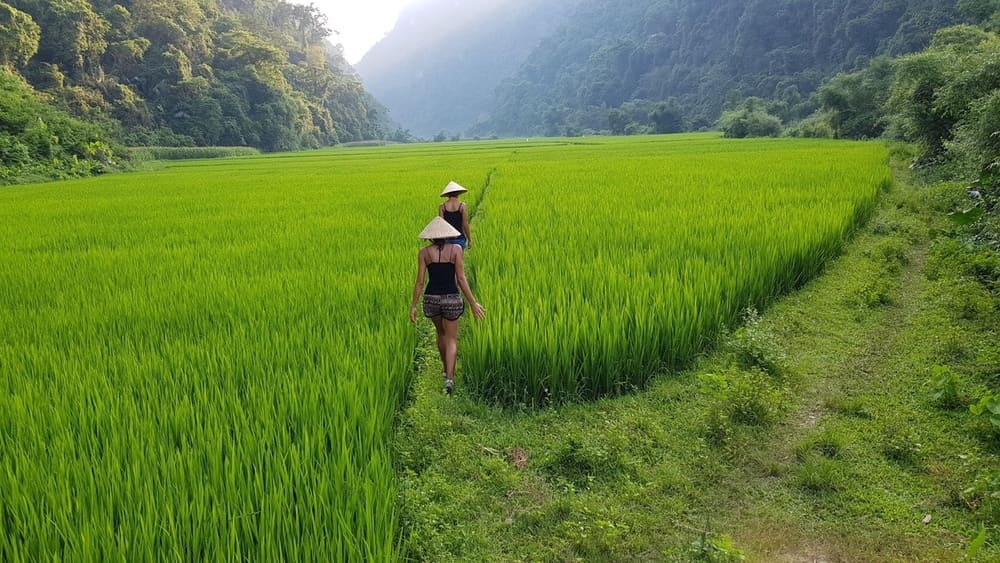
Looking for a peaceful alternative to Sapa's crowds? Just four hours from Hanoi, the emerald Mai Chau valley offers an authentic slice of northwest Vietnam.
The optimal time to visit Mai Chau is from March to May and September to November. April and May are highly recommended for viewing the golden rice harvest. Avoid July to September due to heavy rains and unsafe mountain roads causing significant travel delays.
%20(1).jpg)
Planning your trip around the local agricultural calendar guarantees the best visual experience. During the spring months of March through May, the valley transitions from flooded, mirror-like paddies into lush green fields. Daytime temperatures sit comfortably between 25°C and 30°C, making outdoor activities highly manageable. If you want to photograph the peak golden rice harvest, aim your visit for late May before the farmers cut the stalks.
%20(1).jpg)
Autumn, running from September through November, offers a second distinct harvest cycle. The humidity drops significantly, providing crisp air and clear skies ideal for long-distance cycling. By late October, the second crop matures, turning the valley floor yellow once again. This specific window is heavily favored by local photographers, so booking accommodation in advance is necessary.
You should completely avoid the rainy season spanning July to September. The region experiences intense tropical downpours that frequently lead to flash floods. Furthermore, the primary access route from Hanoi, Highway 6, becomes highly susceptible to landslides. Traveling during these months means restricted outdoor accessibility and an elevated risk of being stranded in the valley.
Mai Chau is 140km from Hanoi, and the journey takes 3.5 to 4.5 hours. Options include premium Limousine vans with hotel pickup
%20(1).jpg)
, local buses from My Dinh station, or renting a motorbike for a scenic drive via Highway 6. Choose your transport based on your budget and tolerance for mountain roads.
Selecting the right transport method dictates the tone of your entire trip. For travelers prioritizing comfort, the premium Limousine vans (often called D-Cars) feature reclining leather seats, strong air conditioning, and direct pickup from your Hanoi accommodation. Conversely, local buses offer a cheaper, more rugged experience alongside local commuters and freight.
| Criteria | Limousine Van | Local Bus |
|---|---|---|
| Travel Time | 3.5 to 4 hours | 4.5 to 5.5 hours |
| Average Cost | 250,000 - 350,000 VND | 100,000 - 150,000 VND |
| Pickup Location | Hanoi Old Quarter (Hotel Pickup) | My Dinh or Yen Nghia Stations |
| Comfort Level | High (Reclining seats, no extra stops) | Low (Crowded, frequent cargo stops) |
Always book your tickets through verified platforms like the Vexere app. This prevents you from paying inflated tourist taxes directly at the bus station. You can view seat layouts, read recent reviews, and secure digital tickets without speaking Vietnamese.
.jpg)
Be aware of the Tong Dau Junction logistical hurdle. Most larger buses cannot navigate the narrow valley roads and will drop you at this junction, which is roughly 5km outside of the main Mai Chau town. You must negotiate a xe om (motorbike taxi) for this final leg. Expect to pay between 30,000 and 50,000 VND, and finalize the price before putting on your helmet.
.jpg)
Independent travelers frequently tackle the route by two wheels. You can rent a reliable semi-automatic bike in Hanoi for 150,000 to 250,000 VND per day. Alternatively, take a van to the valley and rent locally to avoid the highway traffic entirely. If you ride from Hanoi, always add an extra hour to your estimated arrival time to account for mountain road caution.
Navigating Highway 6 safely requires high vigilance. The road features numerous blind corners heavily trafficked by commercial logging trucks. Maintain a moderate speed and strictly stick to the right lane. Weather conditions can change rapidly, dropping visibility to zero within minutes.
.jpg)
You must stop at Thung Khe Pass, sitting at a 1,100m elevation. Aside from offering sweeping panoramas of the valley below, the pass hosts a traditional cliffside market. Local Muong tribes gather here to sell boiled corn, wild orchids, and grilled meats. It serves as an excellent rest stop to stretch your legs and warm up in the cooler mountain air.
Top activities include cycling flat routes through Nhot and Pom Coong villages, climbing 1,200 steps to Chieu Cave, swimming at Go Lao Waterfall, and attending the Pa Co Sunday market to browse genuine Thai textiles. These specific pursuits balance active exploration with profound cultural observation.
The flat valley floor makes cycling the absolute best way to navigate the region. You can easily rent bicycles locally from most homestays for 50,000 to 80,000 VND per day. Before departing, quickly test the brakes and tire pressure, as maintenance standards fluctuate between vendors.
Focus your riding around Nhot Village rather than the highly commercialized Lac Village. Nhot features the most cyclable, flat agricultural paths completely devoid of motor traffic. You will ride directly past traditional stilt houses featuring palm-leaf roofs and elevated bamboo floors. The pace of life here remains firmly tied to the daily agricultural rhythm.
.jpg)
📌 Expert Insight:
The "Friend of the Farmer": Expect to share the narrow village roads with large water buffaloes. They are highly valuable assets to local families and great for photography. However, they are easily spooked, so always maintain a respectful distance and never ring your bicycle bell directly behind them.
Mai Chau is surrounded by impressive karst limestone formations containing extensive cave networks. Choosing which cave to explore depends entirely on your physical fitness and tolerance for steep inclines.
| Criteria | Chieu Cave (Hang Chieu) | Mo Luong Cave |
|---|---|---|
| Steps / Difficulty | 1,200 uneven stone steps / High | Flat walking access / Easy |
| Entrance Fees | 30,000 - 50,000 VND | Free or mandatory guided fee (varies) |
| Crowd Levels | Very Low | Moderate to High |
.jpg)
After a strenuous morning of cycling or climbing, cool off at the Go Lao Waterfall. Located roughly 15km from the main town, this secluded cascade requires a short, slippery hike down to the base. A small local family manages the access path and charges a nominal ~10,000 VND entrance fee. The deep pools at the bottom are safe for swimming, provided you check the current after recent rains.
To witness genuine tribal commerce, you must arrange your schedule around the Pa Co Fair Market. Operating exclusively on Sunday mornings, this market draws Hmong and Thai minorities from across the surrounding mountain ridges. They trade livestock, farming implements, and raw agricultural goods.
The market also serves as a hub for traditional textiles. You can observe local women wearing intricate, hand-woven garments dyed with natural indigo. Purchasing textiles here directly supports the artisans and bypasses the commercial middlemen.
.jpg)
📌 Expert Insight:
The Souvenir Price Trap: Many "traditional" fabrics sold in the heavily touristed Lac Village are actually factory-made synthetics imported from across the border, yet they cost 50% more than identical items in Hanoi. Look for active weavers operating wooden looms in their homes and engage with them to ensure you are buying genuine, locally sourced handicrafts.
Accommodation ranges from traditional White Thai stilt house homestays in Lac and Pom Coong villages for immersive cultural experiences, to luxury options like Mai Chau Ecolodge for premium comfort and privacy. The choice largely dictates how closely you will interact with local families.
For backpackers and culturally curious travelers, homestays in Pom Coong offer unparalleled authenticity. You sleep on thin mattresses arranged on communal bamboo floors. The main draw here is the exceptional home-cooked food, typically featuring bamboo-tube rice and grilled mountain pork served directly by your host family.
If you travel with older parents or require Western-standard amenities, book a private villa at the Mai Chau Ecolodge. This property sits atop a private hill, offering absolute silence, climate-controlled rooms, and a large swimming pool. It removes the friction of communal bathrooms while keeping you geographically central to the valley.
.jpg)
Staying in a White Thai stilt house requires an understanding of local customs. The most critical is the Threshold Rule. You must remove your shoes at the bottom of the wooden stairs. Furthermore, never step directly on the wooden threshold of the main door; always step completely over it, as the threshold is spiritually significant to the household.
Expect to be invited to a Rice Wine (Ruou Can) Ceremony after dinner. The family will present a large ceramic jar filled with fermented rice wine, consumed collectively through long bamboo straws. It is highly polite to participate. If you must decline for health or tolerance reasons, simply touch the communal jar lightly with both hands, bow your head, and express your gratitude verbally.
.jpg)
Foreigners frequently make the mistake of handing out cash or sugary candy to local village children. This encourages begging and causes dental issues in areas lacking modern dentistry. For sustainable gifting, purchase fresh fruit or basic school supplies from local markets and present them directly to your adult hosts or village elders.
Mai Chau offers a peaceful, low-altitude, flat-valley experience ideal for casual cycling and shorter trips from Hanoi. Sapa provides dramatic, high-altitude terrace trekking but requires longer overnight travel and is significantly more commercialized. Base your final itinerary on your physical stamina and schedule constraints.
Mai Chau requires only a short four-hour drive, keeping transit fatigue to a minimum. Because the valley floor is entirely flat, you spend your days casually pedaling through active farming communities. The altitude is low, meaning the air remains warm and heavily oxygenated. The daily village life you observe remains highly functional and largely untainted by mass tourism infrastructure.
.jpg)
Conversely, Sapa demands a heavy logistical commitment, often involving an overnight sleeper train or a strenuous six-hour bus ride. Sitting above 1,500 meters, Sapa features steep, muddy trails that demand specialized footwear and strong cardiovascular fitness. While the sheer scale of Sapa's tiered terraces is visually overwhelming, you will constantly navigate aggressive street hawkers and large tour groups at every major viewpoint.
Bài lquan
Banner CTA TA
Best visited during dry season (November to April) for ideal weather.
Book accommodations in advance during peak travel season.
Carry local currency (Vietnamese Dong) for markets and small vendors.
Respect local customs and dress modestly when visiting temples.