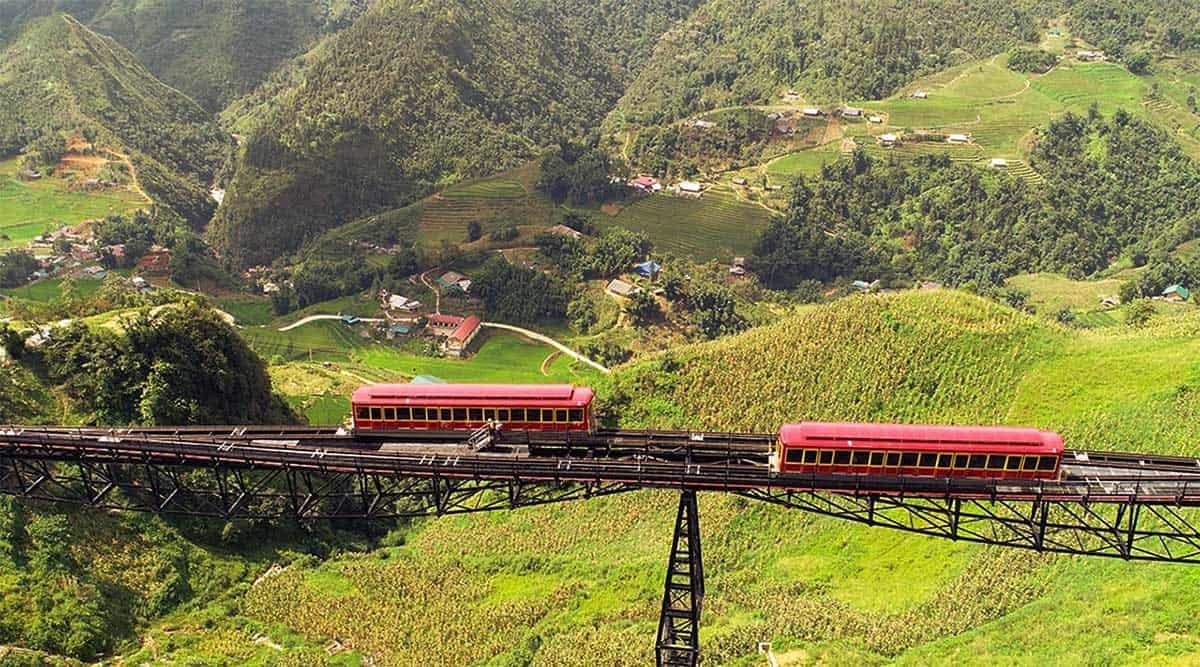

Arriving at Lào Cai Station after an 8-hour overnight journey leaves you tired and immediately surrounded by drivers quoting 600,000 VND for a ride. Most travelers do not realize the train does not actually go to Sapa town. The difference between a stressful arrival and a smooth one is pre-booking the right transfer. This guide shows you how.
The most efficient ways to travel from Hanoi to Sapa are by overnight sleeper bus or train. Sleeper buses provide a direct 6 to 7-hour journey into town via the CT05 Expressway, which opened in 2014 and cut the driving time in half. You board the bus in Hanoi at near sea level and step off directly in Sapa at an elevation of 1,500 meters.
Trains take 8 hours via Vietnam Railways to Lao Cai Province, requiring an additional 1-hour shuttle transfer to reach Sapa. The railway tracks follow the Red River on a flat trajectory, ending at Lao Cai station sitting just 70 meters above sea level. From there, you must take a shuttle van up the steep QL4D mountain pass to complete the final 35 kilometers.
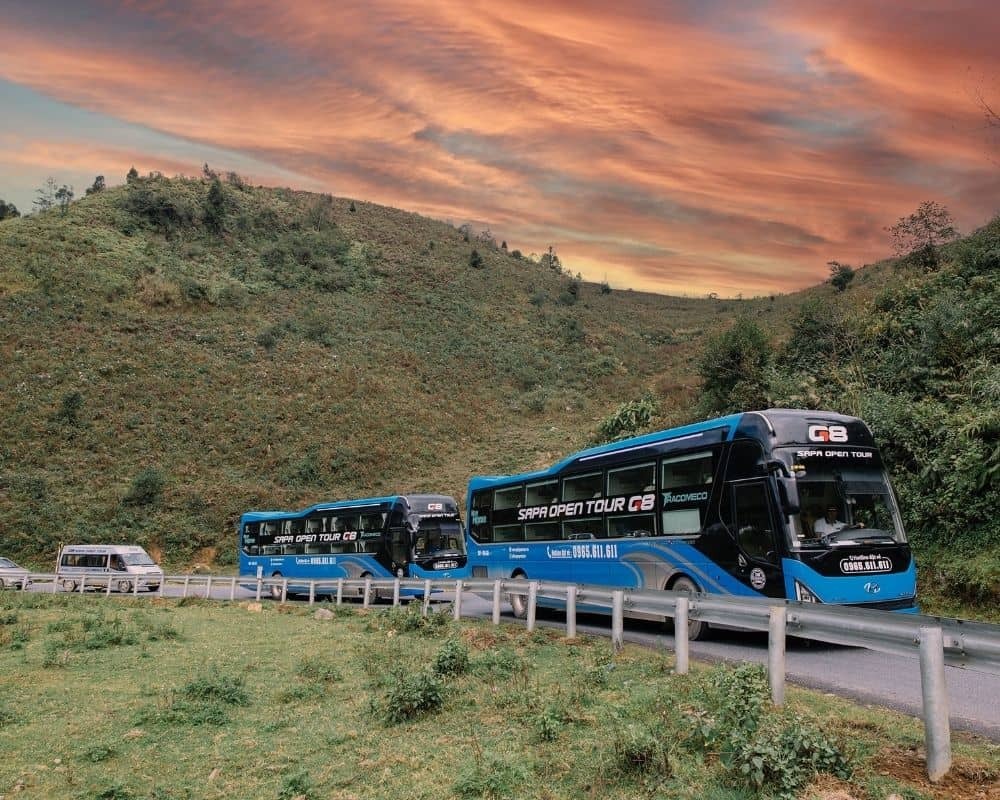
The choice depends entirely on your comfort preferences and physical height. A sleeper bus is significantly cheaper, typically costing around 350,000 VND ($13.78), and goes directly to Sapa town in under 7 hours. However, standard bus berths measure roughly 1.8 meters long, forcing taller passengers to sleep with their knees bent. The final hour of the bus ride also navigates sharp mountain switchbacks, regularly causing motion sickness.
The train offers wider beds measuring roughly 1.9 meters long, a smoother ride on flat ground, and thinner walls separating you from other passengers. Tourist carriages sleep four people to a cabin, allowing you to walk the corridors and use actual restrooms during the night. The downside is the train drops you an hour away, adding logistical steps and extra transfer costs ranging from 60,000 VND ($2.36) to 500,000 VND ($19.68).
.jpg)
Vietnam Railways operates the locomotive, but private companies attach their own upgraded sleeper cars to the back. This business model means you will see a dozen different brands selling tickets for the exact same physical train departure. The main differences lie in mattress thickness, interior wood paneling, and the cleanliness of the shared toilets.
| Criteria | Cost USD | Cabin type | Best for | Watch out for |
|---|---|---|---|---|
| Sapaly Express | $30 - $35 | 4-berth & 2-berth VIP | Couples | Firm mattresses and thin pillows |
| Chapa Express | $32 - $38 | 4-berth wood paneled | Small groups | Aggressive air conditioning, bring a sweater |
| King Express | $28 - $33 | Basic 4-berth | Budget travelers | Older carriages with frequent rattling noises |
.jpg)
📌 Insider note:
Sapaly Express requires you to pick up a physical paper ticket at a small minimart located just outside the Tran Quy Cap station gates before boarding. During the morning arrival, train staff will offer you a cup of hot Milo, then aggressively demand 20,000 VND ($0.79) without having warned you of the price beforehand.
The sleeper bus market out of Hanoi is highly competitive, leading to a recent surge in "VIP Cabin" buses. These vehicles strip out the traditional three rows of bunk beds and replace them with two rows of enclosed plastic pods. These pods offer privacy curtains, USB charging ports, and sometimes individual television screens, making the 6-hour highway drive pass quickly.
| Criteria | Seat type | Travel time | Directness | Onboard amenities |
|---|---|---|---|---|
| Sao Viet | Private Cabin (22 seats) | 6.5 hours | Direct to Sapa center | Wi-Fi, personal TV, water bottle |
| Sapa Express | 32-seat Limousine | 6.0 hours | Direct to Sapa center | Snacks, thick blankets, reading lights |
| Inter Bus Lines | Family double cabins | 6.5 hours | Direct to Sapa center | Neon lighting, loud music, USB ports |
.jpg)
📌 Insider note:
Sao Viet bus operators force all passengers to remove their shoes and place them into a provided plastic grocery bag before stepping onto the bus to keep the aisles clean. You will also have to deal with hard leather block pillows permanently affixed to the cabin beds, so bring a neck pillow to put over it.
If you prefer to sit upright rather than lie down in a plastic pod, the 9-seater VIP Limousine vans offer the best compromise. Operators like EcoSapa modify standard Ford Transit vans, reducing the seating capacity to install wide leather massage chairs. Private cars remain the most expensive option but allow you to control the departure time and schedule bathroom stops at the highway rest stops.
| Criteria | Average Cost | Duration | Convenience | Best for |
|---|---|---|---|---|
| Sleeper Bus | $12 - $16 per seat | 6 - 7 hours | High (direct drop-off) | Budget travelers and backpackers |
| VIP Limousine | $20 - $25 per seat | 5.5 - 6 hours | Very High (hotel pickup) | Couples and comfort seekers |
| Private Car | $120 - $150 total | 5 hours | Maximum (door to door) | Families and groups of four |
.jpg)
The overnight train journey from Tran Quy Cap Station in Hanoi takes roughly 8 hours, usually departing around 10:00 PM on train SP3 and arriving at 6:00 AM. You must enter through Gate B on the western side of the station complex, as the main entrance on Le Duan street serves southbound trains. A newly introduced daytime train runs the same route in 7 to 7.5 hours, though departures are irregular outside of peak domestic holiday seasons. Add one full hour for the required onward transfer up the mountain to Sapa town.
When you step off the train at Lao Cai, you will immediately face a gauntlet of transport operators. The station exit funnels directly into a large concrete plaza where aggressive drivers wait to overcharge arriving tourists. The actual drive up Highway 4D is 35 kilometers long and requires 60 minutes to navigate the steep gradients and heavy truck traffic.
.jpg)
Visiting Sapa is highly worthwhile for travelers seeking contrasting landscapes to the flat, traffic-heavy delta of the capital. The journey escapes the chaotic city to reveal striking terraced rice fields in the Muong Hoa Valley, which turn bright green in July and golden yellow by late September. You gain deep cultural encounters through trekking tours guided by the local H'mong and Red Dao ethnic groups. The Black H'mong are easily identified by their deep indigo-dyed clothing and hemp weaving, while Red Dao women wear bright red geometric headdresses and offer traditional herbal baths using locally foraged bark.
.jpg)
Top attractions include riding the funicular and cable car up Fansipan Mountain, the highest peak in Indochina standing at 3,143 meters. The Sun World cable car system costs 800,000 VND ($31.50) and handles the ascent in just 15 minutes. Cultural highlights involve trekking through Cat Cat Village, located 3 kilometers from town with a 150,000 VND ($5.90) entry fee, and Ta Van Village, sitting 10 kilometers further out into the valley. Rent a scooter to explore the beautiful Silver Waterfall located 12 kilometers north on the O Quy Ho pass, or take a weekend day trip to the colorful Bac Ha Market, a 2.5-hour drive away.
.jpg)
Use Baolau or 12Go Asia to secure seats 48 hours early. Sao Viet charges 350,000 VND ($13.78) for a single cabin. Select lower deck spots to minimize motion sickness on the final 30-kilometer winding mountain ascent into Sapa town.
Several sleeper buses run directly from Noi Bai Domestic Terminal 1 to Sapa. Inter Bus Lines departs the airport at 11:00 PM, saving you a 45-minute drive into central Hanoi. Tickets cost 300,000 VND ($11.81) and require advance reservation.
Bring a reliable 20-liter daypack, two pairs of quick-dry trekking pants, and trail runners with aggressive lugs. High-altitude temperatures drop to 10°C (50°F) at night. Pack 500,000 VND ($19.68) in small bills for village entrance fees and local meals.
Private cabin buses like Sao Viet offer lockable privacy curtains and secure under-bus luggage storage. Book a top-tier single cabin for 350,000 VND ($13.78) to avoid sharing a double bed with a stranger. Theft is rare but keep valuables inside your compartment.
CTA TA
Best visited during dry season (November to April) for ideal weather.
Book accommodations in advance during peak travel season.
Carry local currency (Vietnamese Dong) for markets and small vendors.
Respect local customs and dress modestly when visiting temples.